Here’s a list of my favorite farmers market vendors and small businesses in Portland, Oregon, organized by country or region.
HAITI
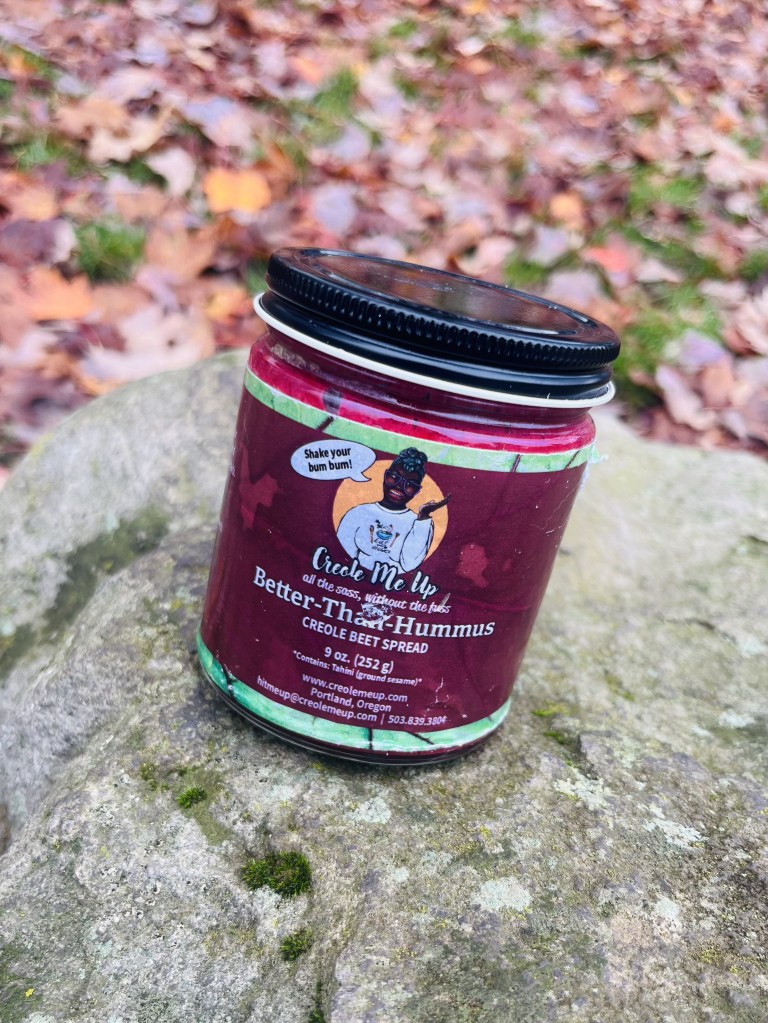
Creole Me Up: A PSU, Beaverton, and Montavilla Farmers Market vendor and business dedicated to helping individuals overcome health challenges by offering flavorful, organic, and allergen-free plant-based products that honor founder Elsy Dinvil’s Haitian roots. Click here to learn more about Elsy and her business.
Better-Than-Hummus Creole Beet Spread.
HAWAII
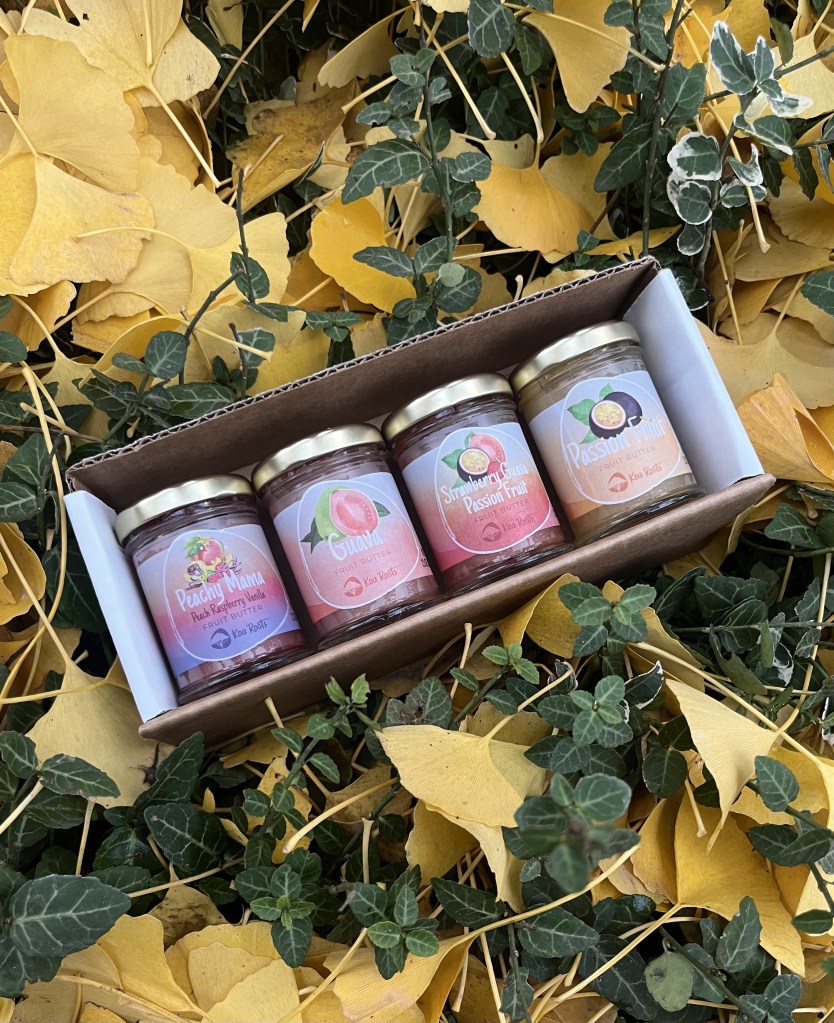
Koa Roots: A wonderful company crafting delicious and sustainable Hawaii-meets-Pacific Northwest fruit and smoked brown butters. Check out this post to learn more about the amazing creators, Robert and Kristi, and the inspiring story behind Koa Roots.
Peachy Mama, Guava, Strawberry Guava Passionfruit, and Passionfruit Fruit Butters.
ITALY/MEXICO
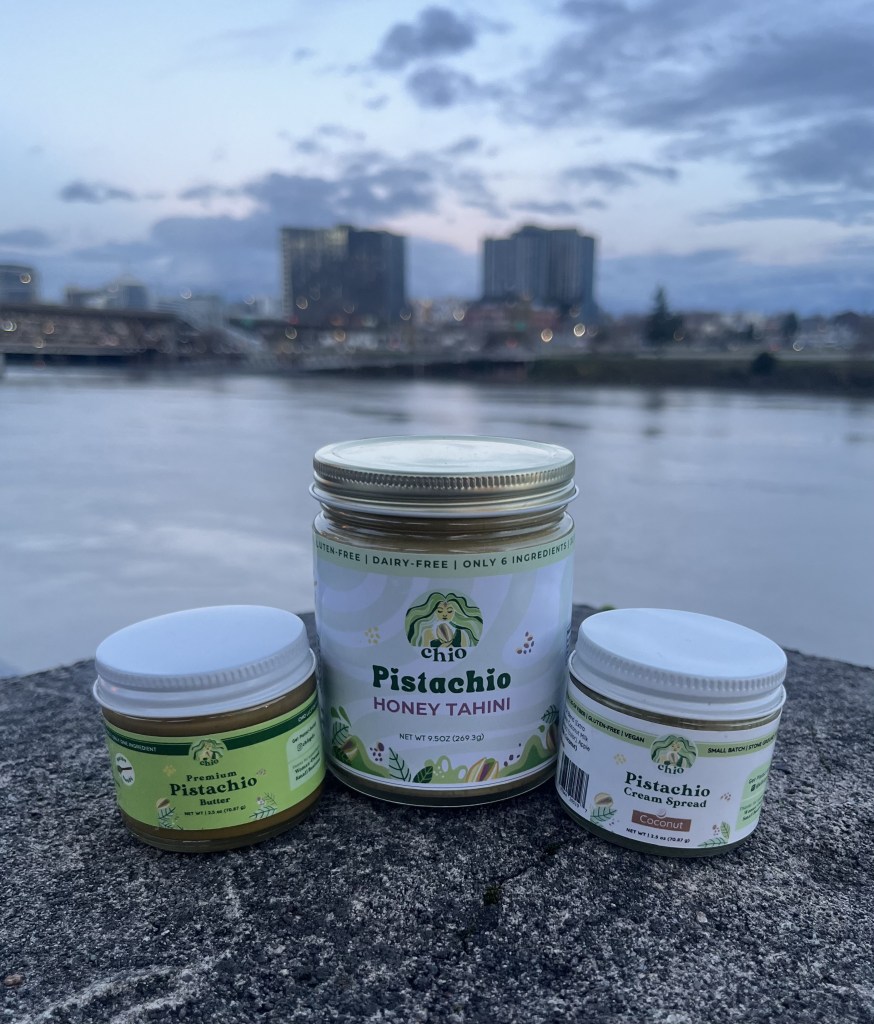
Chio: A Latina-owned business offering better-for-you premium pistachio spreads. Click here to learn more about Mexican-Sicilian founder Anaia Castaneda and the story behind Chio.
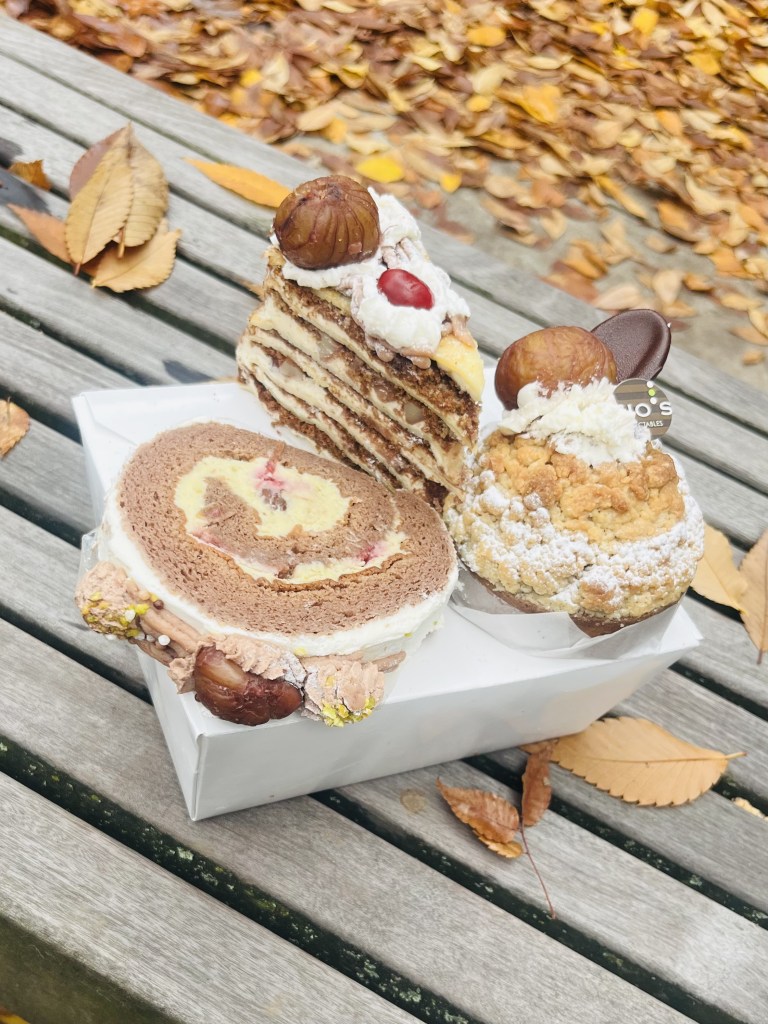
Mio’s Delectables: A beloved PSU Farmers Market vendor offering an extensive menu that blends the refined simplicity of Japanese desserts with traditional French pastry techniques, all while highlighting Portland’s local produce. Although the selection by creator Mio Asaka varies week to week, you’ll always find a wide array of tarts, tartlets, cookies, cakes, and seasonal spins on classics like Mont Blanc and tiramisu. Click here to discover more of Mio’s exquisite creations.
From left to right: Oregon Chestnut Chocolate Swiss Roll Cake with Pistachio White Chocolate Ganache Cream, Candied Chestnut, and Cranberry Confiture; Chestnut Chocolate Mille Crêpe Cake with Chestnut Crème Diplomate and Candied Chestnut; and Chestnut Crumble Tart with Candied Chestnut, Pinot Noir Confiture, and Frangipane.
JORDAN
Moony’s Sweets: A Portland Saturday Market vendor and family business offering beautiful American, European, and Arabic sweets and treats. Check out this interview from Bold Journey Magazine to learn more about Muna Mohammad, the mother of four and baker behind the business.
Rose Cheesecake (front left) and Pistachio Berry Honey Cake (back right).
MEXICO
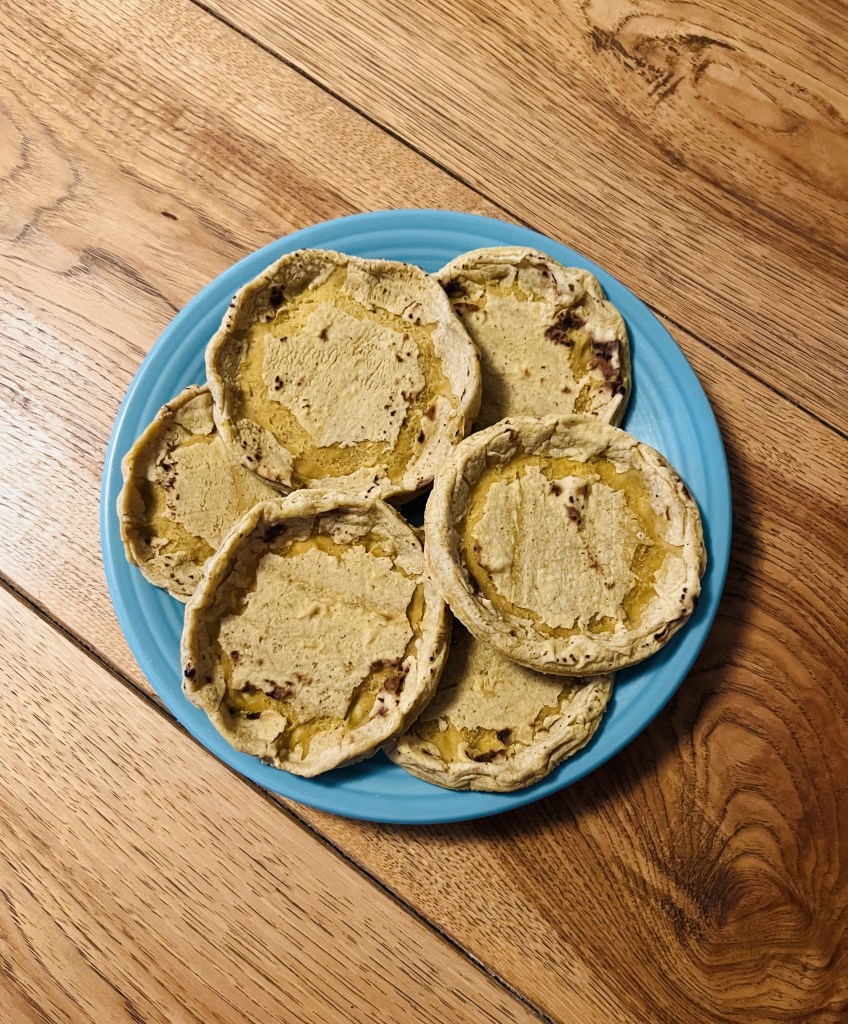
Three Sisters Nixtamal: Three Sisters Nixtamal: A PSU Farmers Market vendor offering gluten-free, GMO-free organic masa (dough) and tortillas made with fresh nixtamal—the product of a traditional cooking method that involves heating whole dry corn kernels in water with calcium hydroxide. Click here to learn more about the founders: Mexico City native Adriana Azcárate-Ferbel, her husband Pedro, and their friend Wendy Downing.
Sopes made with fresh masa.
TIBET
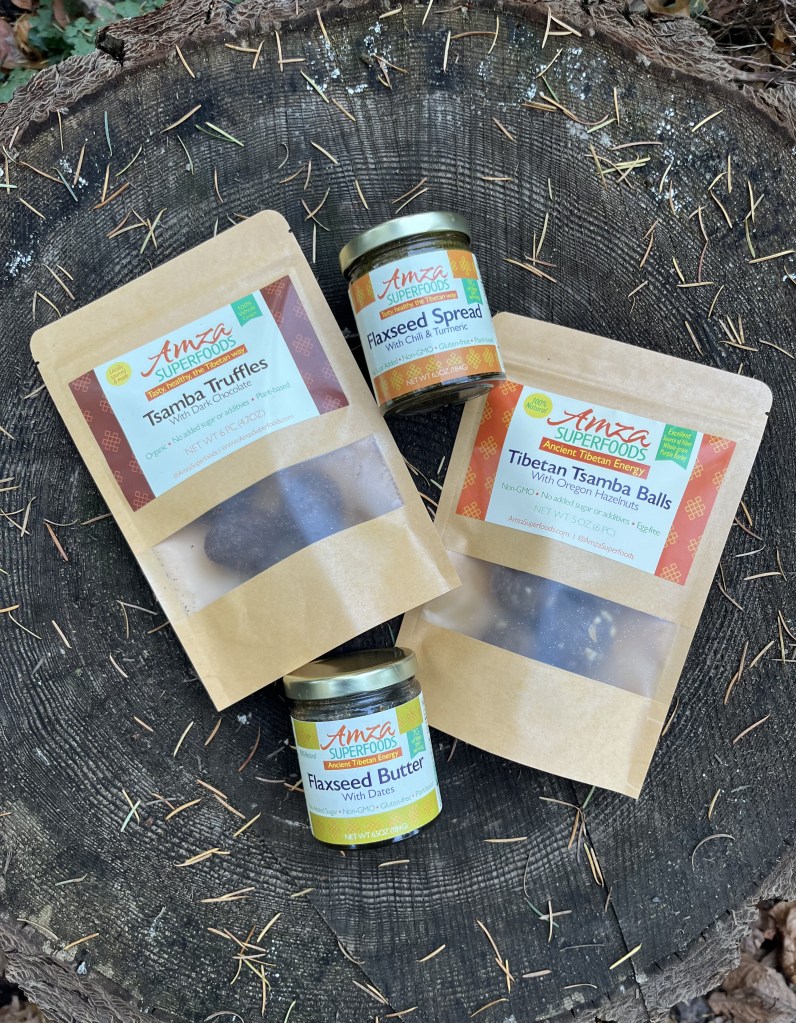
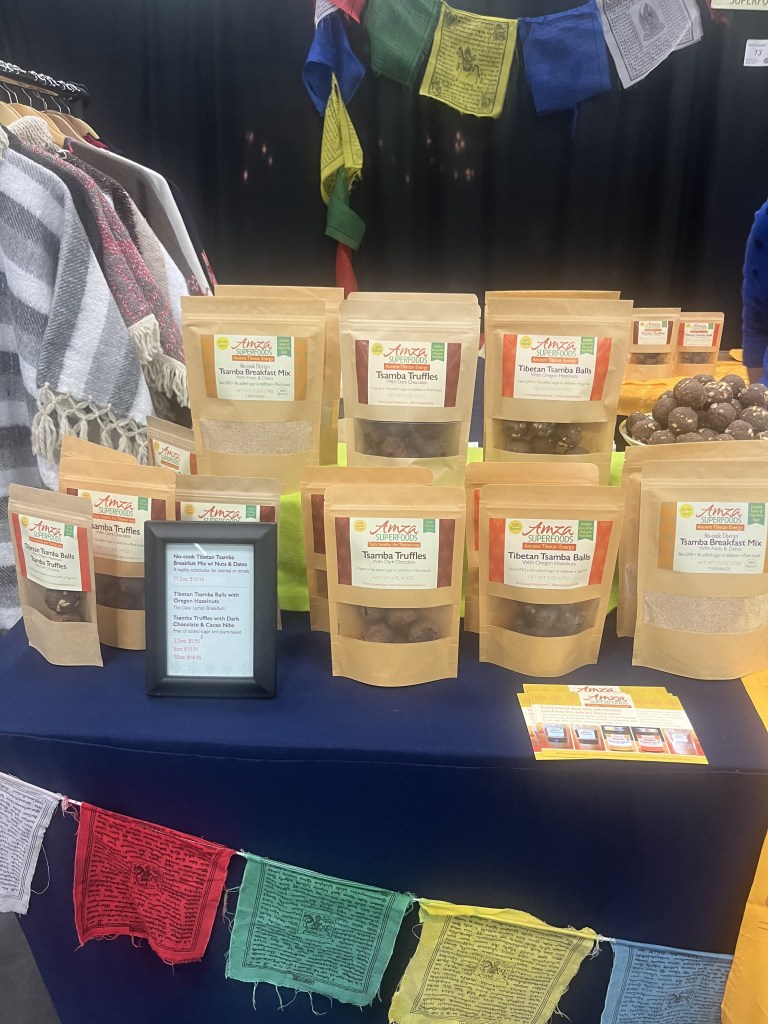
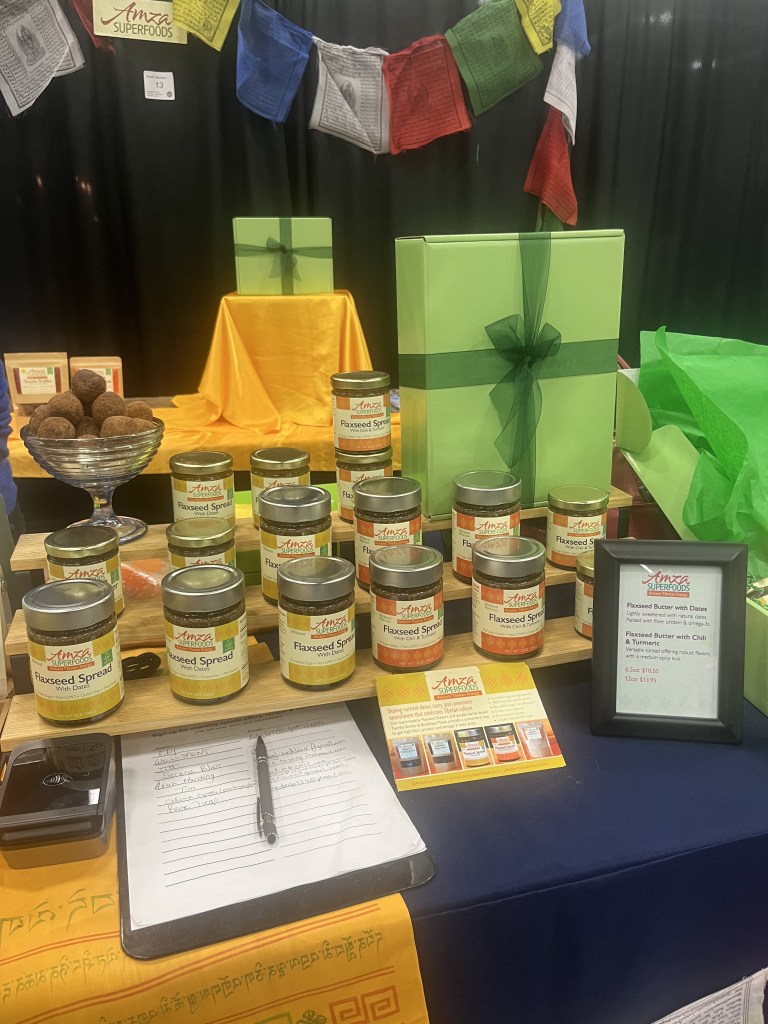
Amza Superfoods: A Portland-based business dedicated to promoting Tibet’s healthy eating traditions and empowering underserved Tibetan women. Click here to read my blog post about Jolma, the wonderful UX design consultant turned entrepreneur behind the business.
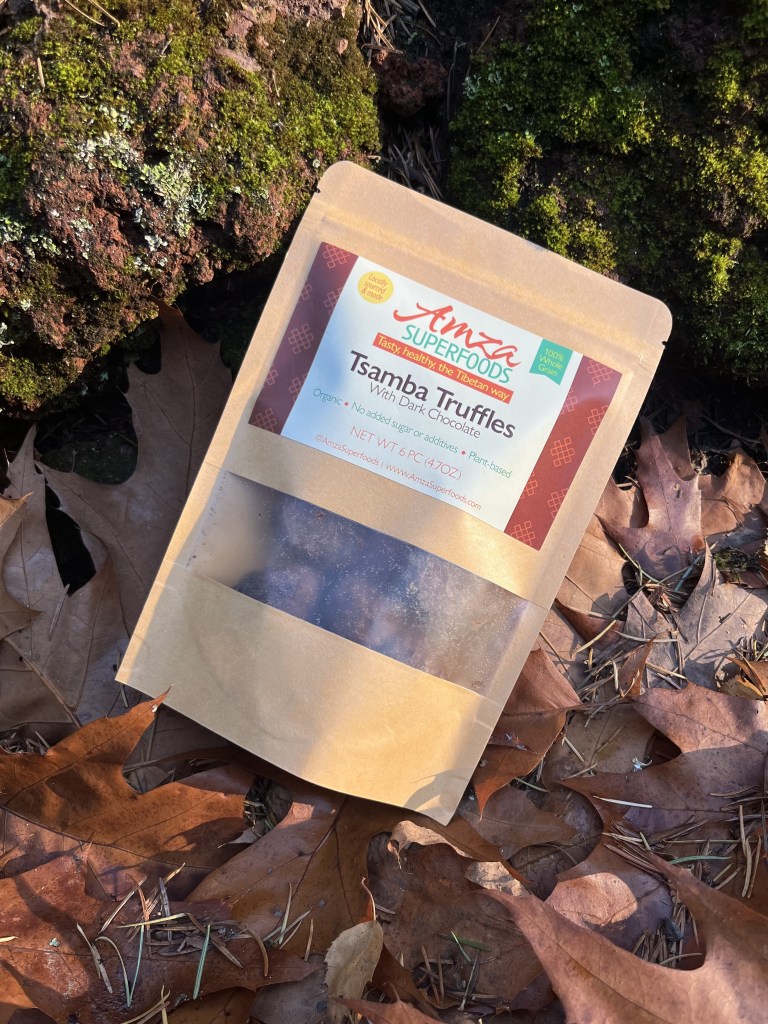
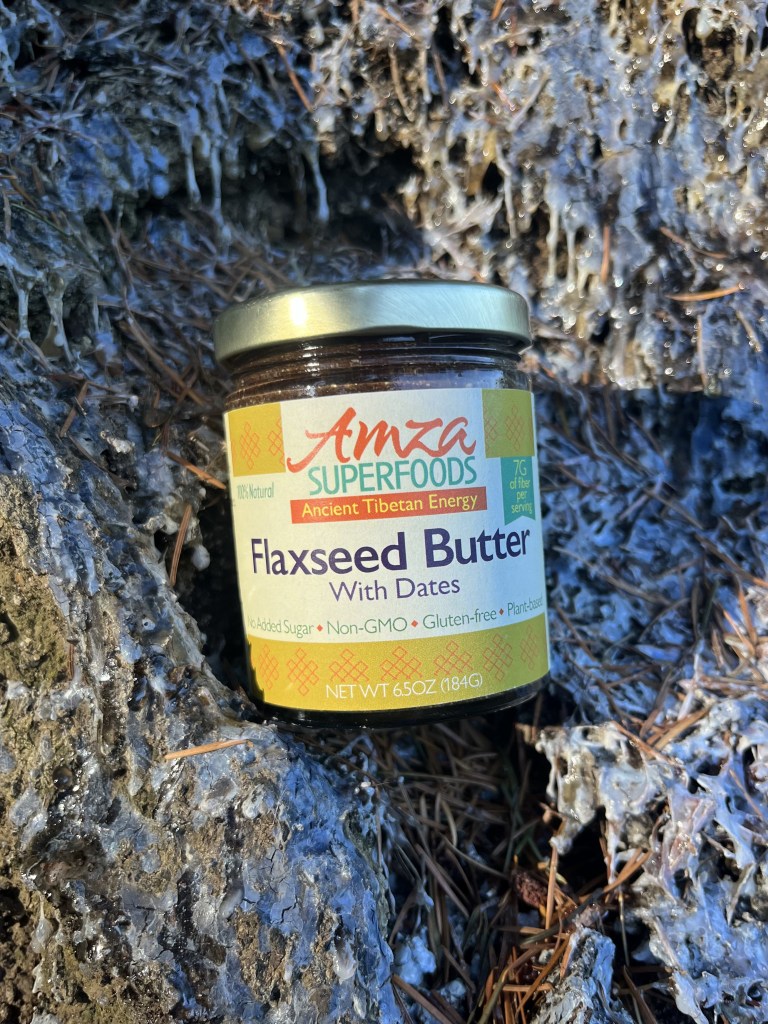
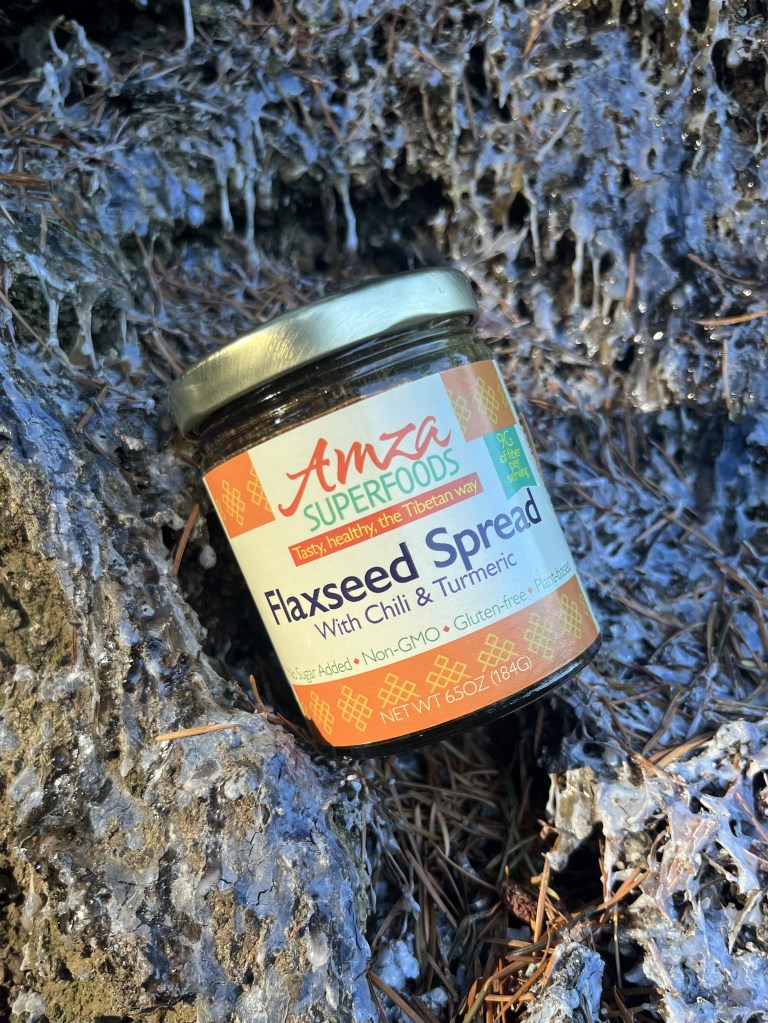
From left to right, in clockwise order: Tsampa (roasted barley flour) Truffles with Dark Chocolate, Flaxseed Spread with Chili & Turmeric, Tibetan Tsampa Balls with Oregon Hazelnuts, and Flaxseed Butter with Dates.
BONUS BIPOC BUSINESS PICK
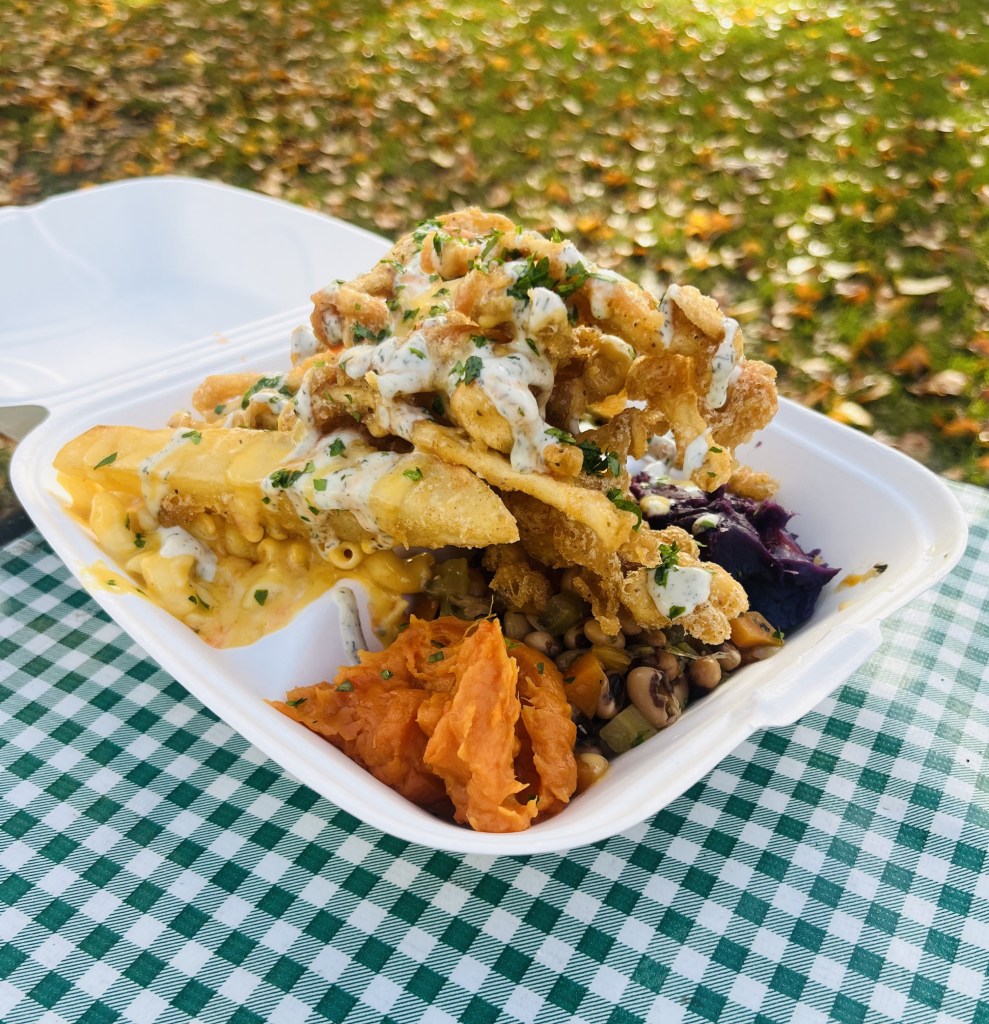
Black Girl Veggies: A Black-owned, plant-based hot food vendor and caterer serving up delightful dishes like vegan fried chicken made with oyster mushrooms at the King, Shemanski Park, and PSU Farmers Markets. Click here to learn more about creator Shonnett O’Neal and her story.
Soul Bowl with collard greens, black-eyed peas, mac and ‘cheese,’ sweet potatoes, purple potatoes, and vegan & gluten-free fried chicken.
Here’s a list of my favorite places to eat in Portland, Oregon, organized by country or region.
BULGARIA
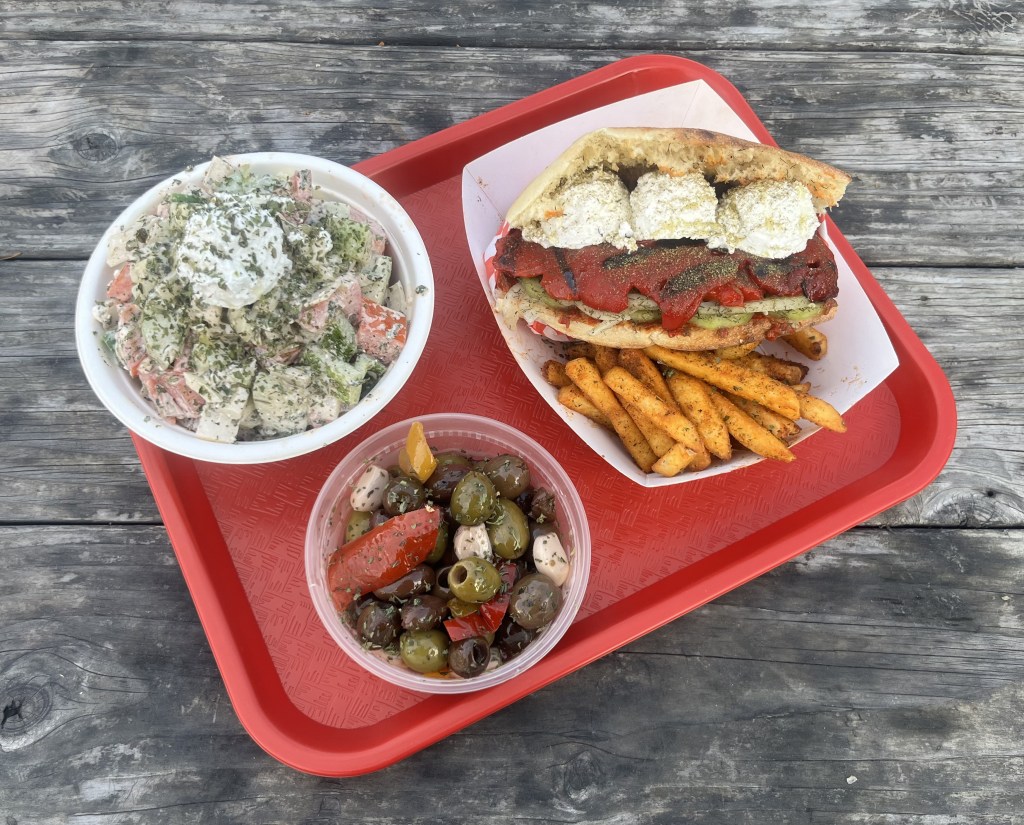
The Bulgarian Job: A bright yellow food cart run by Ilin and Boris Georgiev, two brothers with a passion for sharing Bulgarian culture, food, and history. Check out this post to learn more.
Top left: Shopska Salata—a Bulgarian national dish made with tomatoes, cucumbers, onions, peppers, parsley, olive oil, and sirene (Bulgarian brined white cheese). Bottom left: Mixed olives sautéed with spices, red pepper, and garlic. Right: Fire Roasted Djob—a bread pocket stuffed with roasted red pepper and sirene, served with crispy fries.
CAMBODIA/LAOS
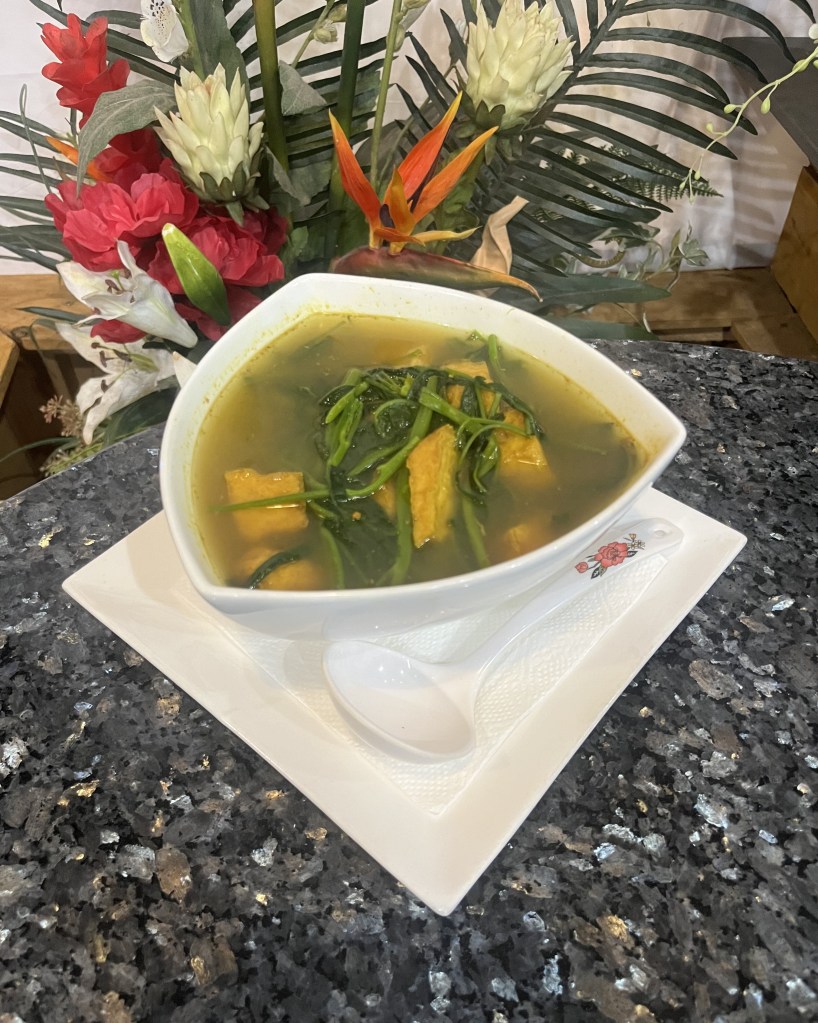
Mekong Bistro: A Cambodian-Laotian restaurant, family business, and vibrant gathering space featuring a concert area and dance floor. Check out this fantastic article by Elizabeth Mehren to learn more about Saron Khut, the owner of Mekong Bistro and founder of the Mekong River Band, and his incredible story and commitment to building community.
Som-Lar Maju Kreung: A Cambodian sour soup with ong choy (water spinach), tofu, and a homemade blend of herbs and spices.
COLOMBIA
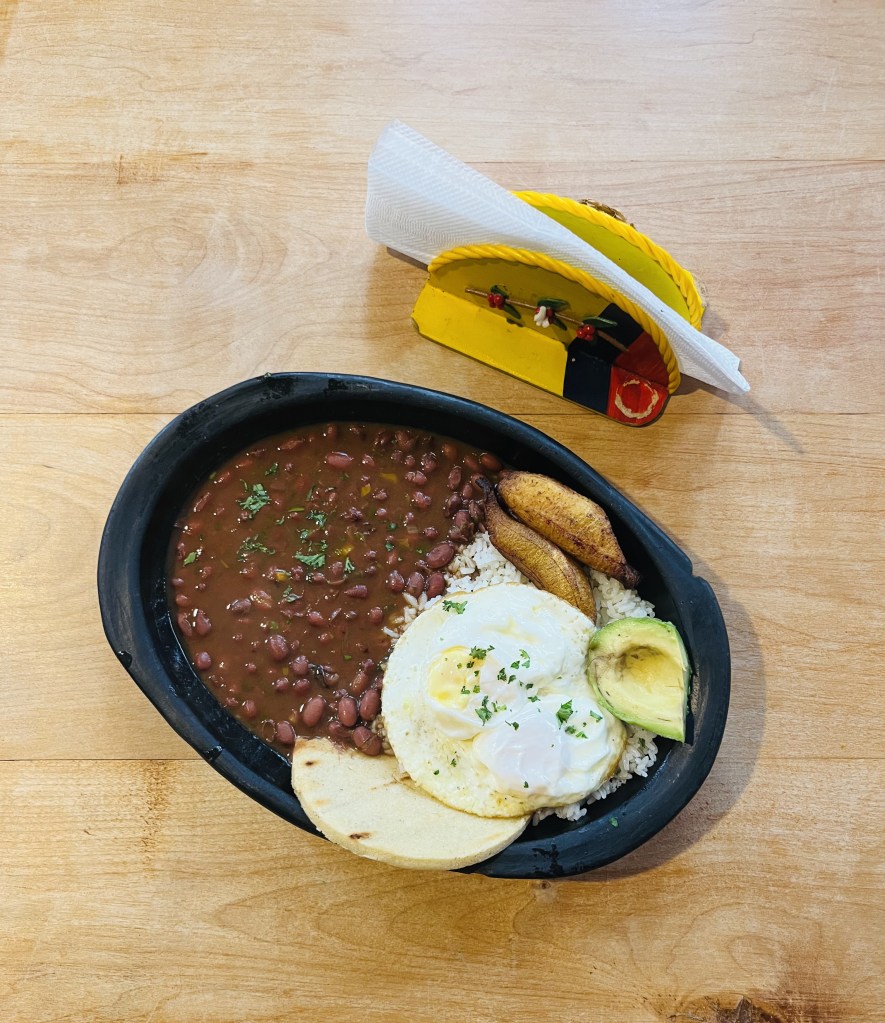
Que Bacano: A Colombian food cart (and member of the Portland Mercado) that expanded into a brick-and-mortar restaurant on SE Hawthorne Blvd in 2020. The name comes from a Colombian slang term referring to something cool, nice, hip, or radical. Click here to learn more about the former dentist-turned-owner Andres Felipe Perez and his business.
Vegetarian Paisita (a spin on the classic Colombian Bandeja Paisa) with beans, rice, plantains, avocado, two fried eggs, and an arepa.
COSTA RICA
La Carreta Pura Vida: A delightful family business serving up vibrant Costa Rican fare inside the Pine Street Market in Old Town. Check out this post to read more about co-owners Alvin Pérez and Liliana Gaitán and the story behind their business.
A vegetarian take on the beloved Costa Rican Casado, featuring rice, beans, salad, plantains, pico de gallo, panela cheese, and eggs.
DEMOCRATIC REPUBLIC OF THE CONGO
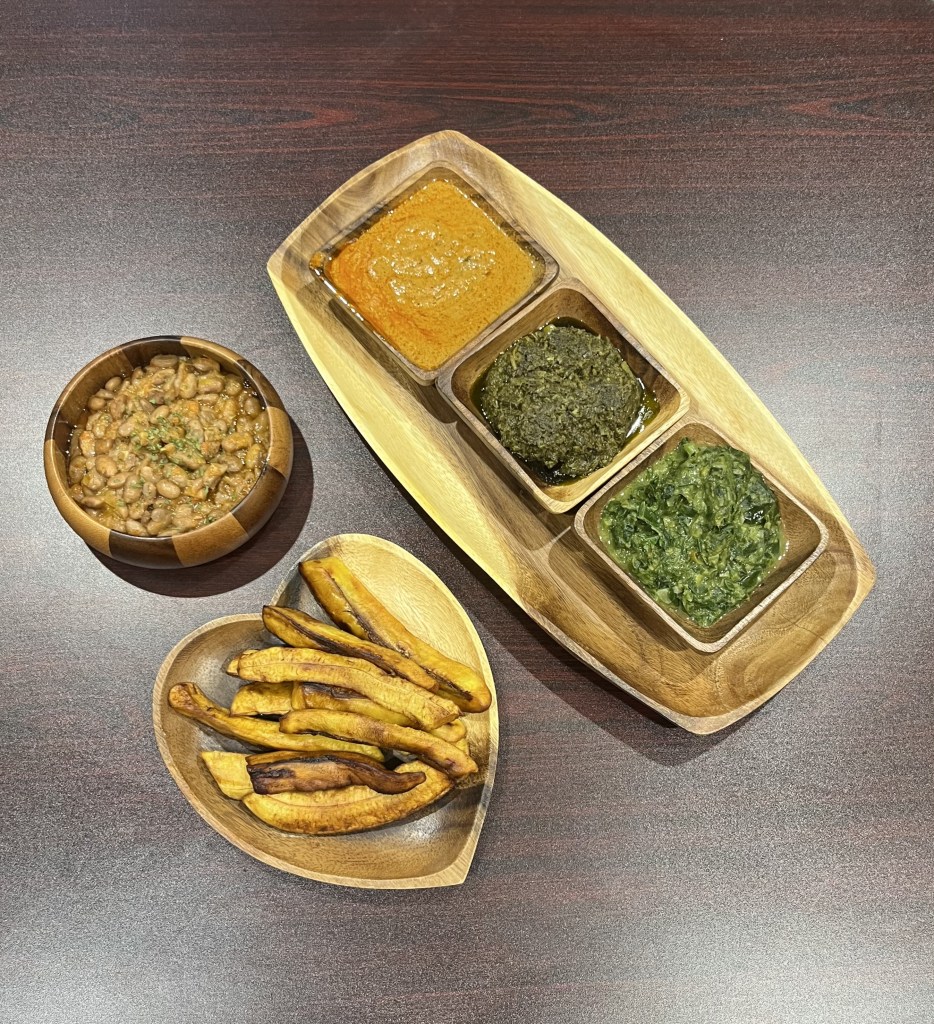
Patience S Cuisine: A small but welcoming Congolese joint that opened in Old Town in June 2024. Head here to learn more about how Patience, the incredible one-woman force behind the business, reclaimed her relationship with food and is using Congolese cuisine to share her culture and build community.
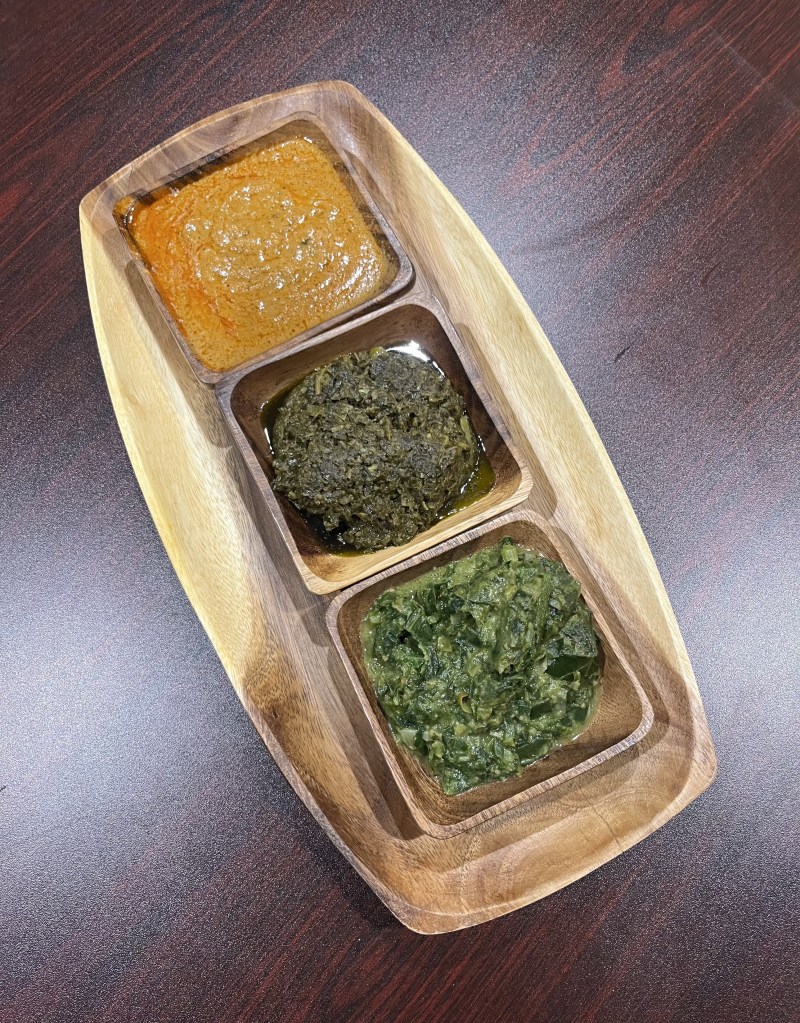
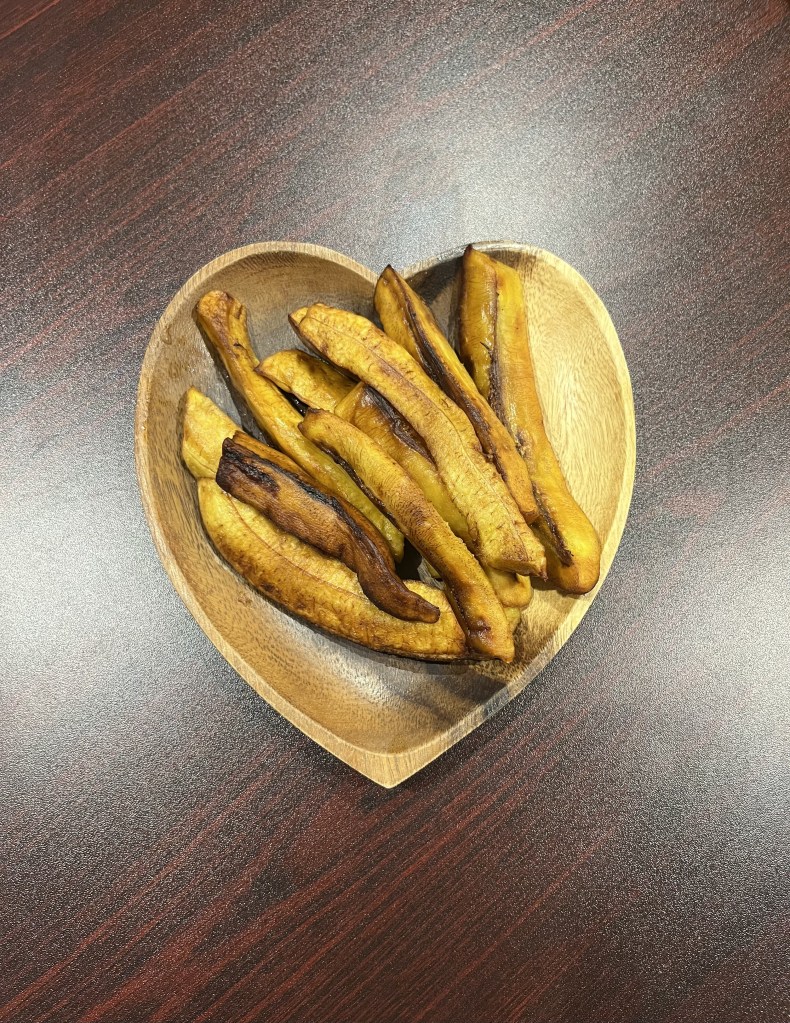
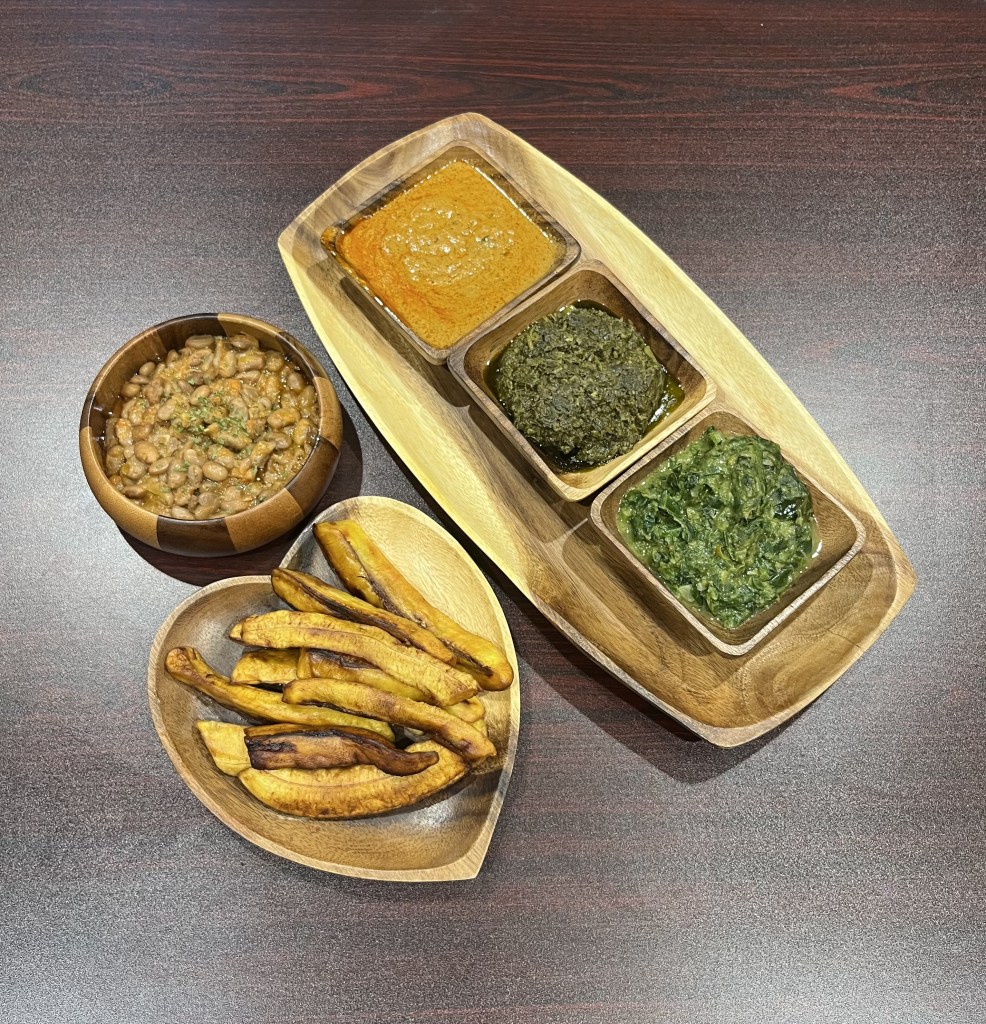
Top left: Madesu (tender beans cooked in a savory sauce and garnished with fresh herbs); bottom left: Makemba (fried plantains); top right to bottom right: Kpadamu (groundnut soup), Pondu (cassava leaves simmered with peanut butter and palm oil), and Nkovi (collard greens cooked with peanut butter).
GUYANA
Bake on the Run: The first and only food cart serving Guyanese food on the West Coast. Founded by mother-and-son duo Bibi and Michael Singh, Bake on the Run opened in September 2018 and is part of the WonderLove Food Cart Pod. Check out this link to learn more about their story and menu.
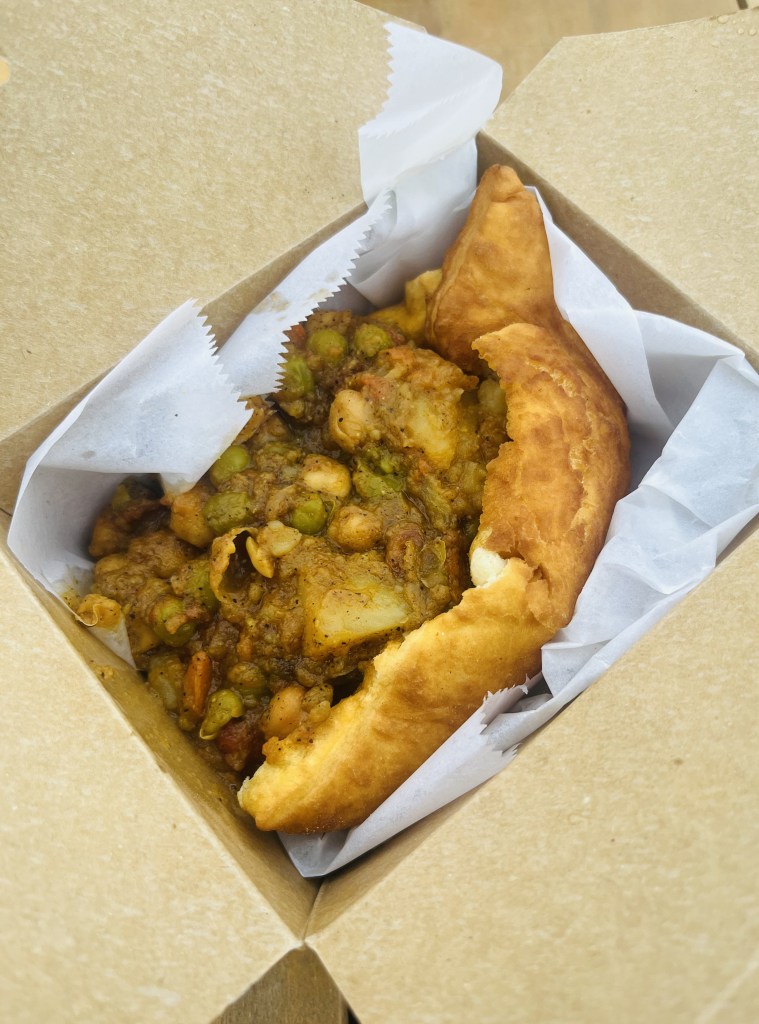
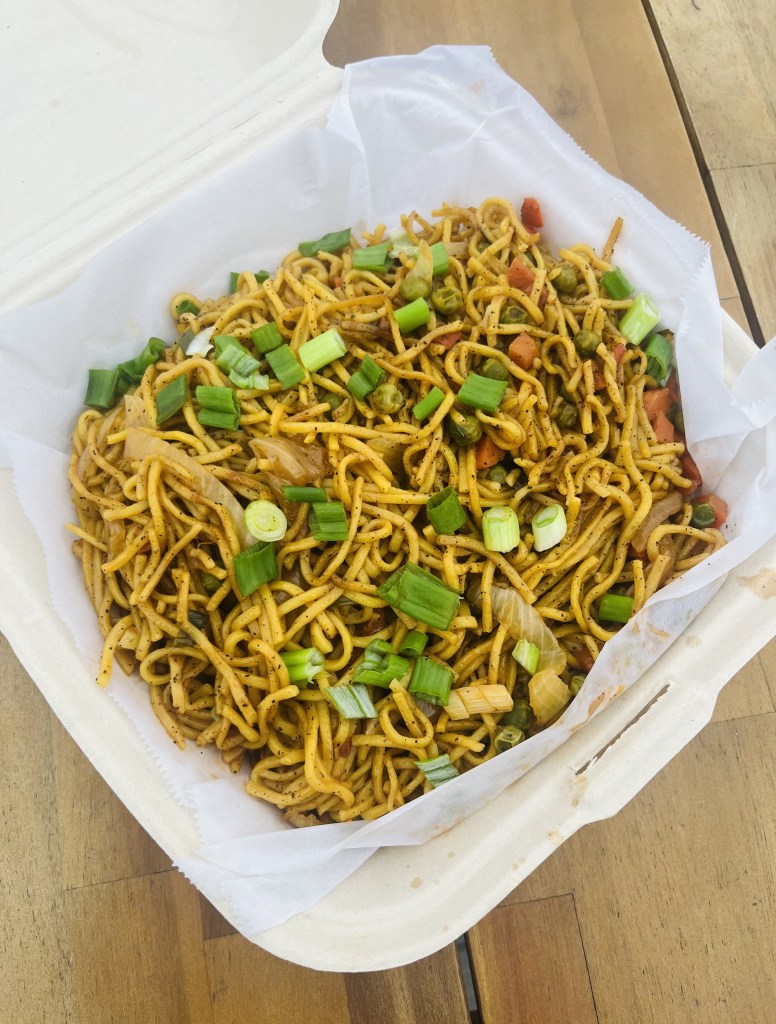
Top left: Bake (semisweet Guyanese puff bread) with Guyanese Chana Aloo (chickpea potato curry). Top right: Bake with pumpkin butter. Bottom: Chef Bibi’s Guyanese Vegan Chow Mein (made with award-winning noodles imported from Guyana).
JAPAN
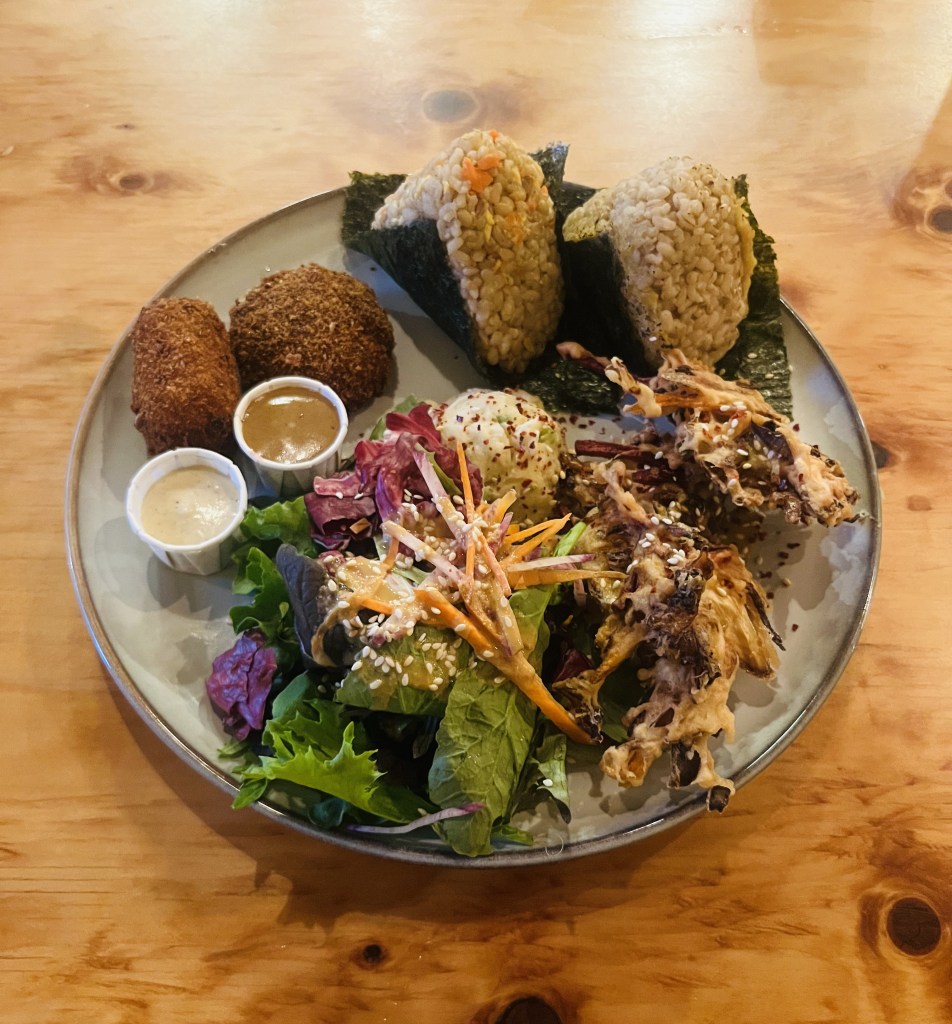
Obon Shokudo: A cozy spot in Portland’s Central Eastside offering plant-based Japanese comfort food. Check out this post to learn more about co-owners Humiko Hozumi and Jason Duffany.
The Combo: Two onigiri (nukazuke pickled ginger & carrot, and Buddha’s hand with hominy miso), one giant panko-crusted tater tot, one curried korokke (a mixture of Japanese sweet potatoes, raisins, and curry spices, coated with panko breadcrumbs and fried to perfection), one kakiage (a savory fritter made with onions, cabbage, and seasonal ingredients), and a small side salad with sesame dressing.
NEW ZEALAND
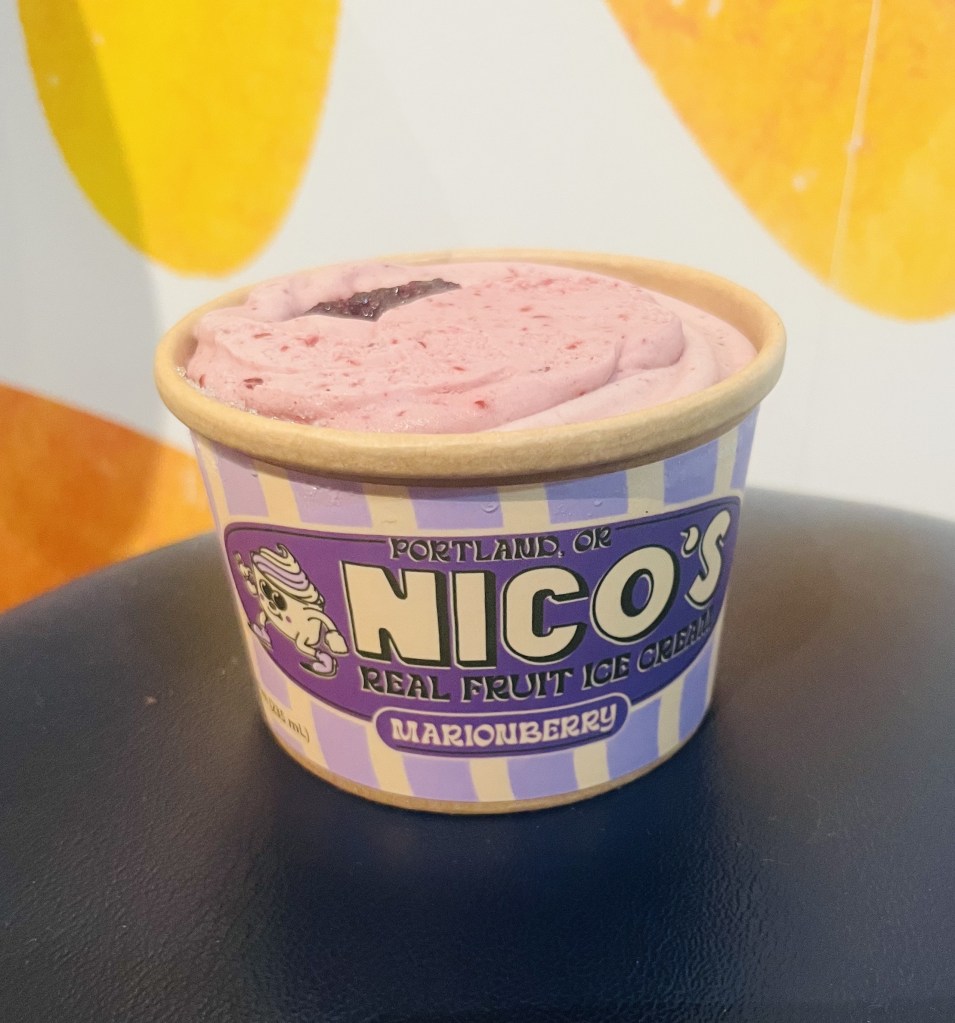
Nico’s Ice Cream: A business serving New Zealand-style ice cream (real fruit blended with vanilla ice cream) at two locations in Portland and two in California. Check out their website for more information.
Nico’s Real Fruit Marionberry Ice Cream: A creamy blend of Oregon marionberries and vanilla ice cream.
NORWAY
Viking Soul Food: A wonderful restaurant in Portland’s Woodstock neighborhood serving innovative Pacific Northwest-meets-Nordic cuisine. Click here to read more about co-owners Megan and Jeremy and the story behind their business.
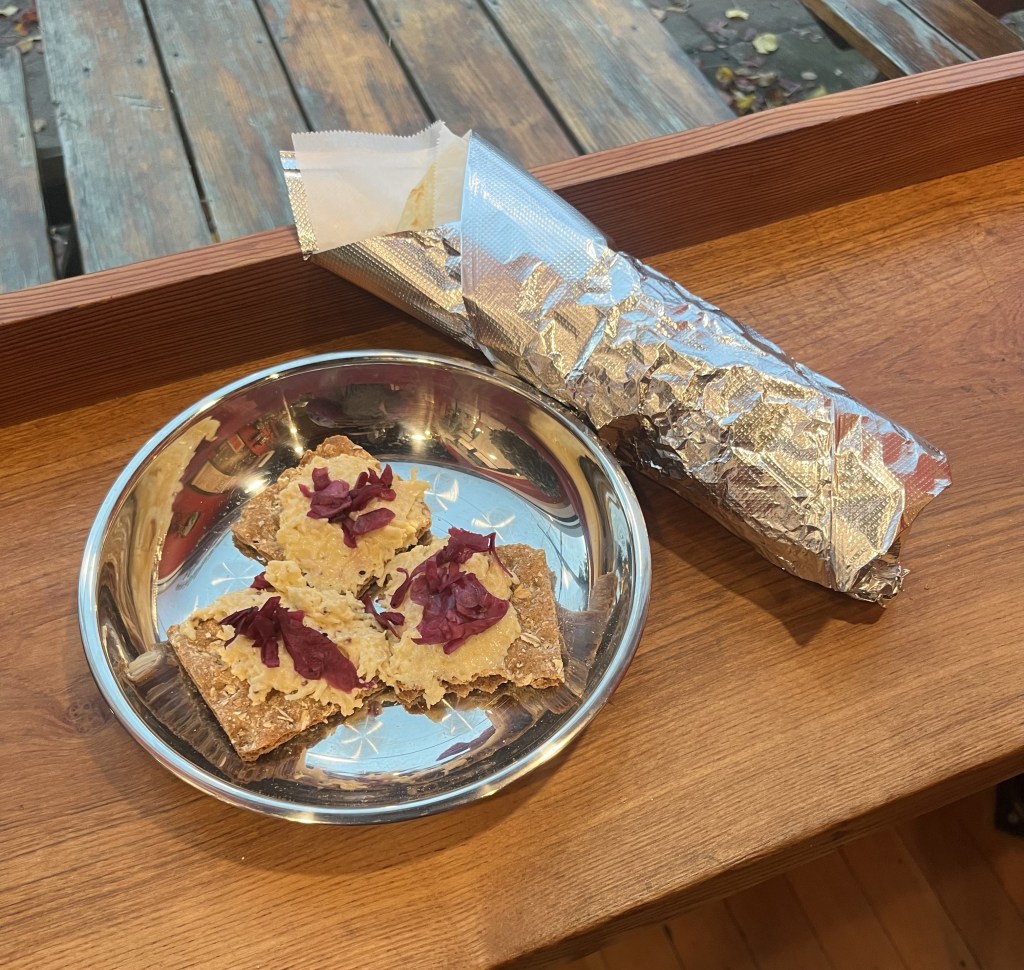
Left: Troll Snack (roasted garlic and Jarlsberg cheese spread on rye crackers, garnished with surkal—sweet and sour purple cabbage pickled with apple cider vinegar and caraway). Right: Lefse (Norwegian flatbread made with potatoes) wrap with homemade mushroom and hazelnut patties, toasted hazelnuts, Danish blue cheese, surkal, mild greens, and parsley vinaigrette.
SRI LANKA
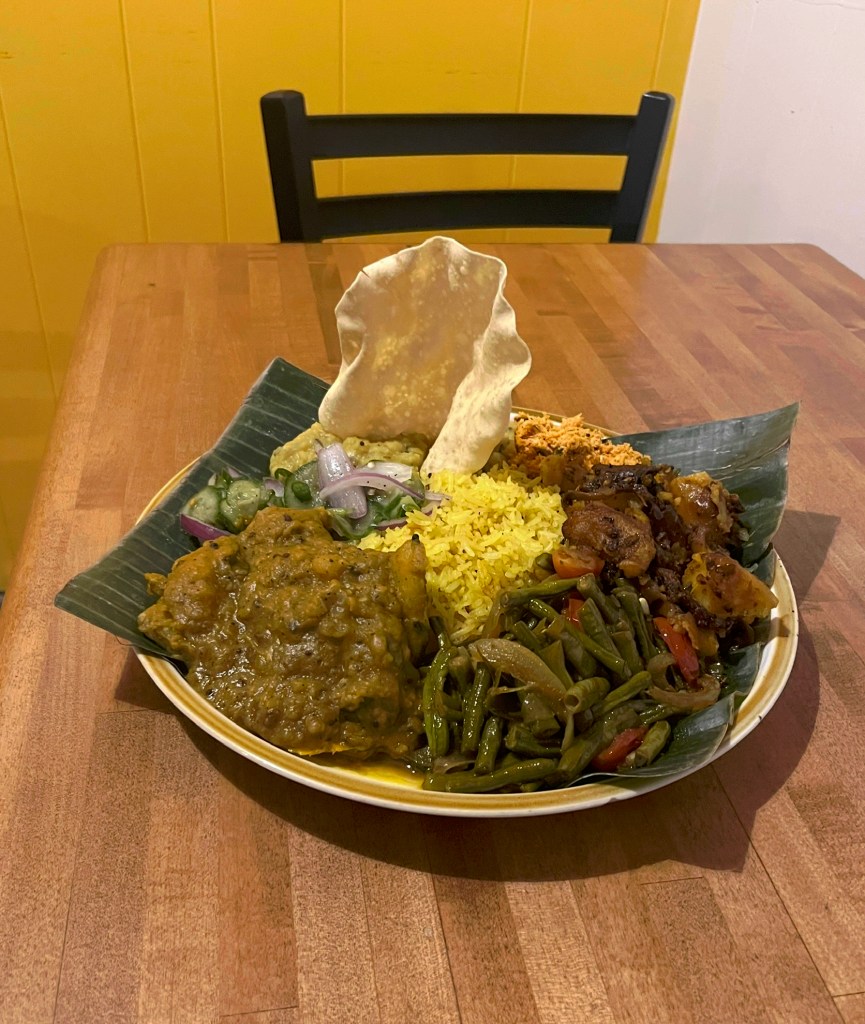
Mirisata: A BIPOC/worker-owned, vegan, and tipless Sri Lankan restaurant on SE Belmont. The name can loosely be translated from Sinhala (one of Sri Lanka’s two official languages) as ‘spicy curry.’ Check out their website for more information.
Rotating Rice and Curry Plate with pumpkin curry, tempered long beans, deviled potatoes, cucumber sambol, and pol sambol (a Sri Lankan condiment made with grated coconut, chilis, onions, and lime), served on a banana leaf. Always accompanied by Parippu (Sri Lankan lentil dahl curry), Kaha Bath (yellow rice), and Papadam (crispy lentil flour cracker).
SWITZERLAND
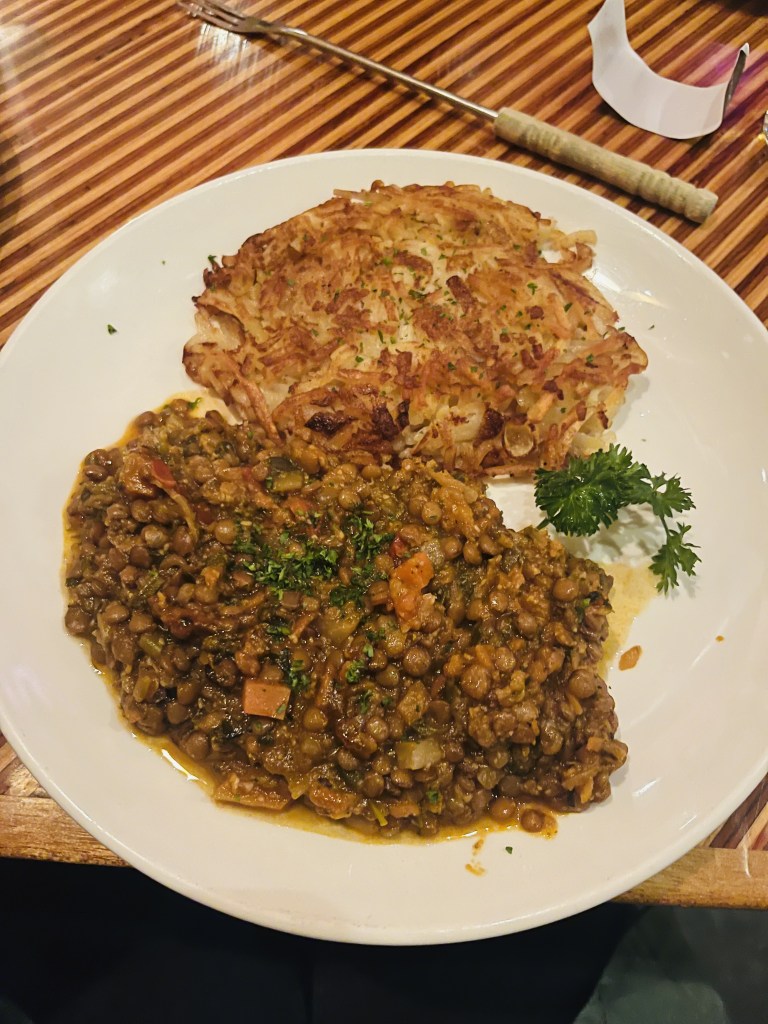
Swiss Hibiscus: A cozy restaurant in the Alberta Arts District serving Swiss classics like fondue and Spätzli (Swiss-style pasta). The name pays homage to the restaurant’s Swiss-Hawaiian heritage, which you can read about here.
Vegan lentil stew with vegan rösti (Swiss-style hash brown).
VENEZUELA
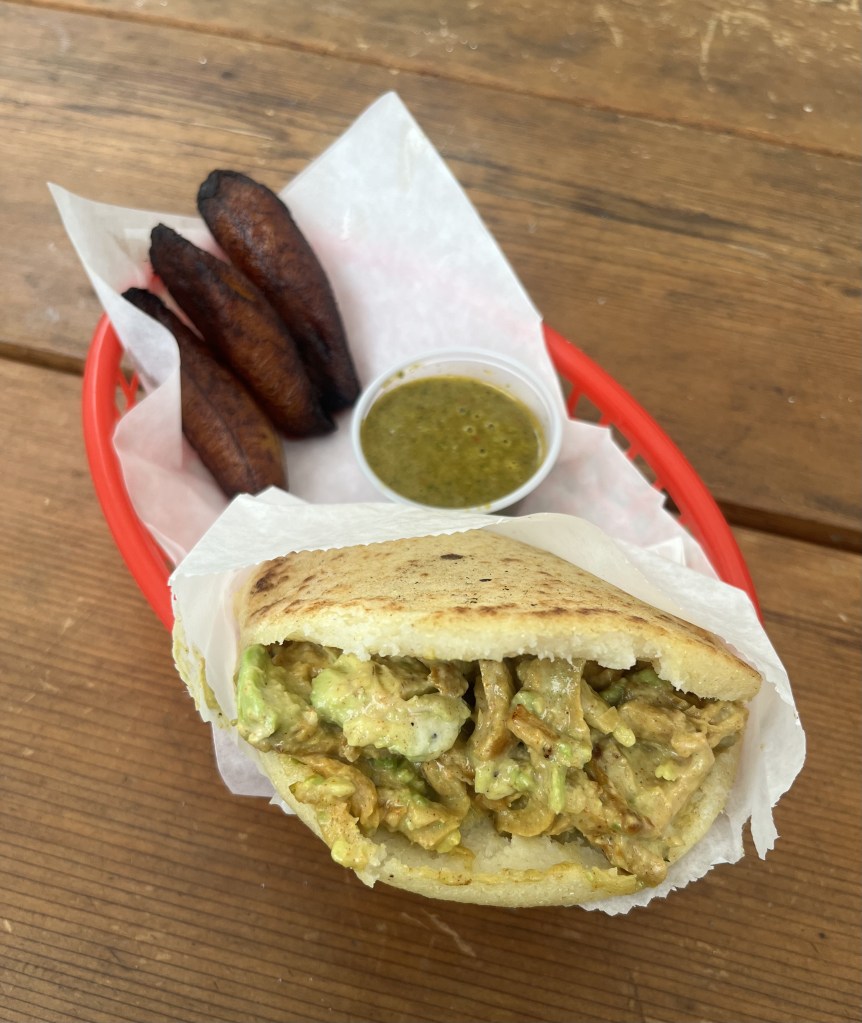
El Salto PDX: A vibrant Latina-owned food cart specializing in vegan Venezuelan fare. The name refers to El Salto Ángel (Angel Falls), the world’s tallest uninterrupted waterfall, located in Venezuela’s Canaima National Park. Check out this post to learn more about the business and owners, Paola and Pablo Cruz.
A vegan take on the Venezuelan dish Arepa Reina Pepiada with homemade chickpea poyo, garlic aioli, and creamy avocado. Also pictured: sweet plantains and guasacaca (a zesty, creamy Venezuelan green sauce made with cilantro and peppers).
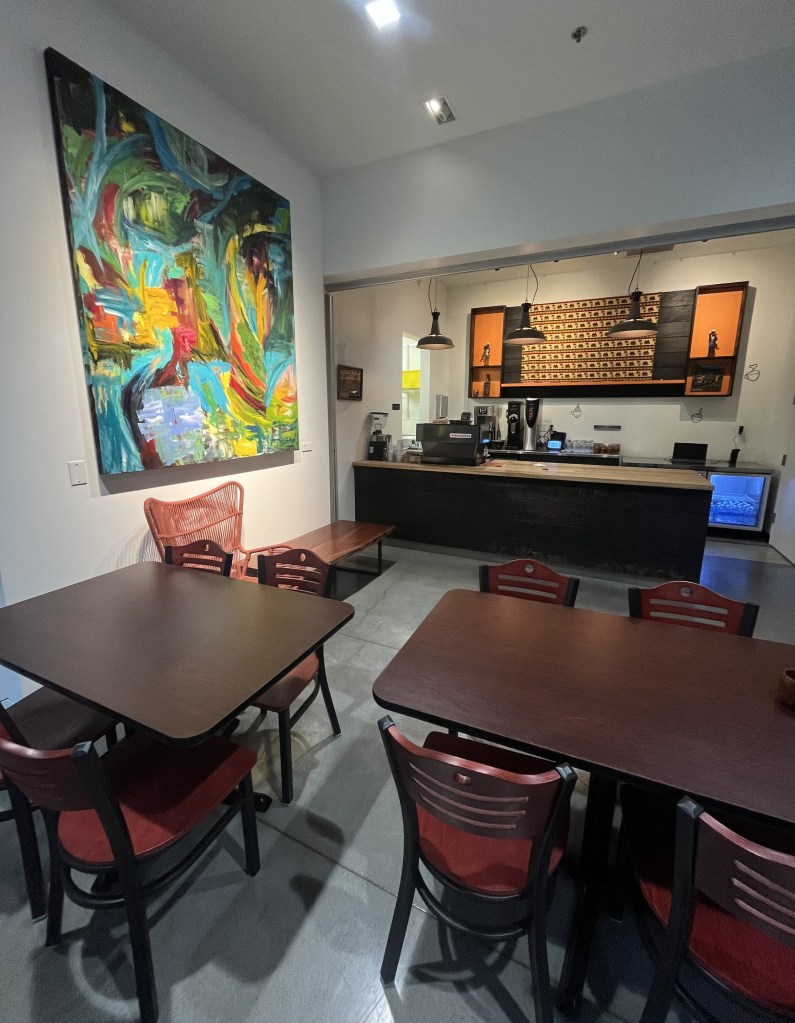
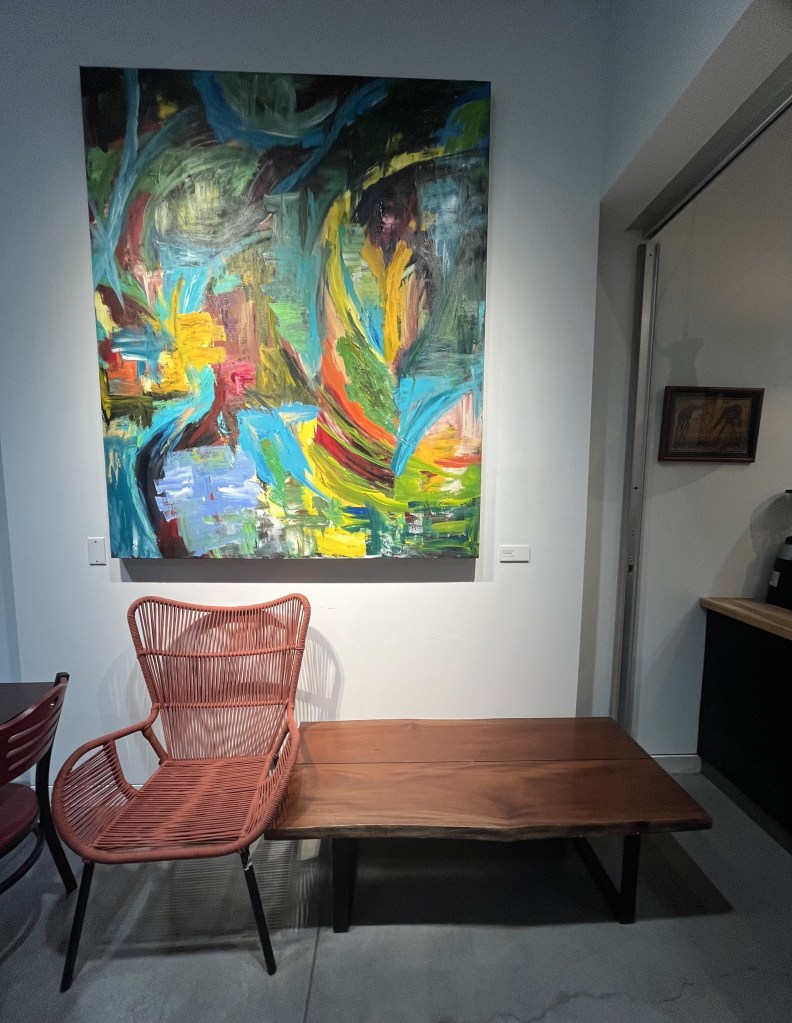
Inside Patience S Cuisine, a cozy space with warm wooden accents and colorful artwork
I’m not a huge fan of the phrase “things just aren’t meant to be,” but it sure felt relevant as I frantically speed-walked to the downtown Portland Police Bureau on a rainy Thursday afternoon in November. Let me explain.
For every city I visit, I take the United Nations list of Member States and look up some version of the formula ‘country + restaurant + city.’ Having never tried food from Belize, I was particularly excited when Love Belizean in downtown Portland popped up during my research.
I first tried visiting the restaurant on Veterans Day, but sadly, despite what Google Maps told me, it was closed. The second time, they were sold out. The third time, on my way from the bus to the restaurant (a path I knew all too well thanks to my failed prior attempts), I saw something that caught my eye. I reached into my pocket to take a picture with my phone. Except my phone wasn’t there.
By the time I retrieved my phone—from a very kind lawyer who interrogated my mother (thank you, Mom, for thinking to call my number!) to ensure she wasn’t a thief or scammer—the restaurant was closed, which convinced me that the third time, alas, is not a charm.
Fortunately, though, my beloved formula had helped me locate plenty of other interesting places, including Patience S Cuisine, a Congolese joint that happened to be open and located in roughly the same area.
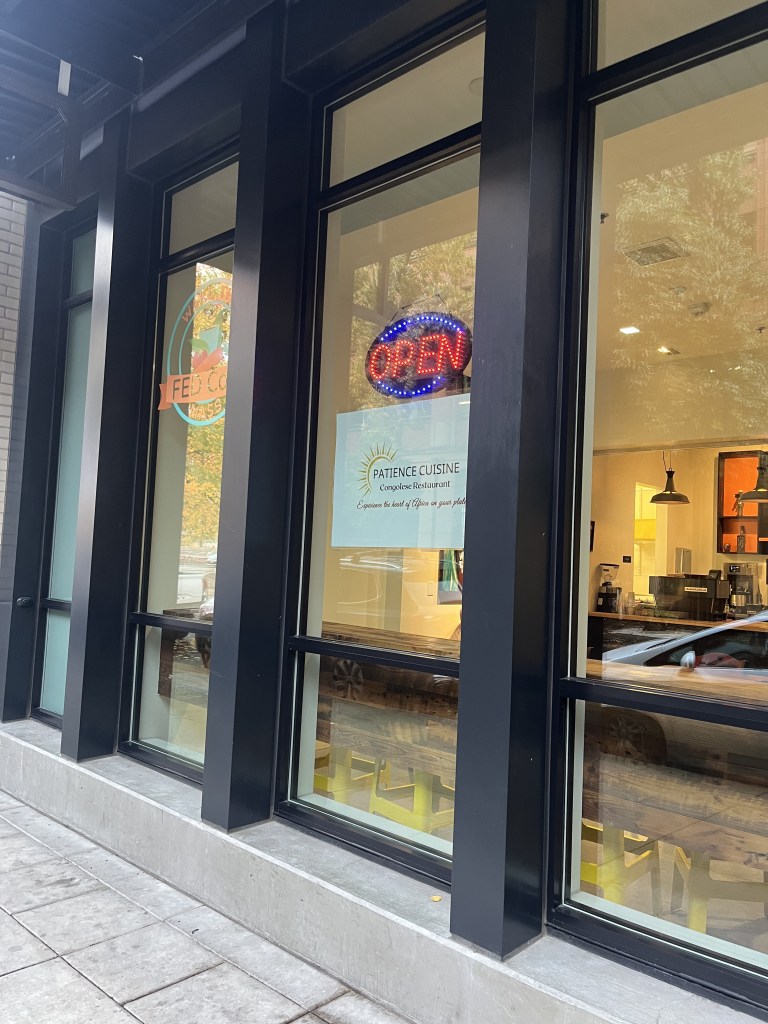
The exterior of Patience S Cuisine, located in Portland’s Old Town neighborhood
When I got to the restaurant, I was famished and frazzled. As I was perusing the menu, I shared my misadventures with the owner, Patience Sema Tshokote, and we immediately bonded over our shared struggles with losing things (unlike me, though, she wisely keeps her phone on a lanyard around her neck!).
Given how hungry I was and that I’d never had Congolese cuisine before, I decided to order a selection of vegetarian dishes: Kpadamu (groundnut soup), Pondu (cassava leaves simmered with peanut butter and palm oil), Nkovi (collard greens cooked with peanut butter), Madesu (tender beans cooked in a savory sauce and garnished with fresh herbs), and Makemba (fried plantains). Patience also gave me some of her homemade hot sauce on the side, although all of the dishes were plenty flavorful on their own. I loved the creaminess of the greens and the heartiness of the beans, but as someone who will happily eat peanut butter straight from the jar, my favorite was definitely the Kpadamu.
From top to bottom: Kpadamu (groundnut soup), Pondu (cassava leaves with peanut butter and palm oil), and Nkovi (collard greens with peanut butter)Madesu (tender beans cooked in a savory sauce and garnished with fresh herbs)Makemba (fried plantains)
After savoring my delicious, nourishing meal and packing up my leftovers, I asked Patience about what brought her to Portland and how she got into the restaurant business. Because the information she shared with me is very vulnerable and personal in nature, I felt that it was important to use her words rather than my own. The transcription below was reviewed and approved by Patience prior to publication.
Patience’s Story, In Her Own Words
I came here in the mid-90s. I came with my family, my mom and dad. I have 3 brothers and 1 sister, but I lost my older brother back in 2018. I came at the age of 16, going on 17. Before I came here, my mom came in 1989; she left me back home with her family members. I was maybe about 9 or 10, but I went through a lot of abuse, like all kinds of abuse that a person can really go through at that age, which, you know, I lived through it. But one of the traumas that I had was around food. So if I was to get punished, they would withhold food from me, but I would be the one to cook or assist with cooking and serving, and then the punishment was to sit there and watch people eat. There [was] harsh punishment, even for the littlest things, so I grew detached from food.
Coming here, I was almost 17, weighing 98 pounds. I was really frail, I was skinny, so I got here, and the food was horrific to me because it was not what I was used to, and everything is processed. And so I would eat and throw up, and I was so sick for the longest time. I was so tiny, and I never reached 150 [pounds]; even during my pregnancy I only weighed 149 [pounds].
Then my insecurity with food grew, but it kind of changed once we started getting more Asian stores bringing [ingredients] like cassava leaves. And then I learned there were collard greens because I didn’t know what it was called here, so I would look for it everywhere. But then I found out that’s what we call Nkovi back home, and we cook it differently. So then we started noticing there were plantains coming in, sweet potatoes and potato leaves, and all those things, so I started feeling like home again. So I was like, ‘okay, this is time for me to cook,’ so I started cooking.
Top left: Madesu; bottom left: Makemba; top right to bottom right: Kpadamu, Pondu, and Nkovi
I started selling food from my garage because my friends were like, ‘We eat here all the time, [we] think you need to start charging us,’ and I thought that was a good idea. So then I started.
Also, I was a single mom for a very long time. My daughter is 23 now, but it was a rough situation. My baby daddy, my first husband, tried to kill me when my daughter was 6 months old, so I fled.
I’ve lived through all kinds of situations, and that’s why I’m trying to thrive: so I can give some women [a] voice after what I’ve gone through, girls who might still be experiencing it. Me cooking, honestly, is just trying to get out of my trauma, trying to have an outlet. My cooking is the joy of my life right now; it’s really my passion.
And then I do want to have a nonprofit starting here to help girls and boys who are on the street back home or who are being neglected by family members, because a lot of people will say, ‘Oh, I’m going to the United States or I’m going to Belgium, I’ll send for my kids,’ and those kids stay in the neighbors’ homes, and sometimes [the neighbors] kick them out, and then they start living on the street. And you see a 9, 10-year-old girl doing things for money, things a little child shouldn’t have to be doing, which is really devastating. And so I want to be able to use my cooking as a way to show those people that there’s hope. If I can make them smile one day, at least that one day will count.
It’s an interesting life story or experience that I’ve had, but I definitely don’t want to dwell on it. I want to be able to help my community or any community that would be in need of help.
Aside from here, I work in the building down the street as a med tech. I worked for IRCO for 6 years as a domestic violence program coordinator, but then vicarious trauma got me. But I love working in the community. I love working with people. I love helping people make good decisions and making a difference in people’s lives.
About Patience S Cuisine
Located in Portland’s Old Town neighborhood, Patience S Cuisine opened in June 2024. The small but welcoming restaurant combines warm wooden accents with vibrant colors and artifacts from the Democratic Republic of the Congo. From sweet treats and hearty stews to grilled meats and tender greens, the menu features authentic Congolese dishes made with locally sourced, seasonal ingredients.
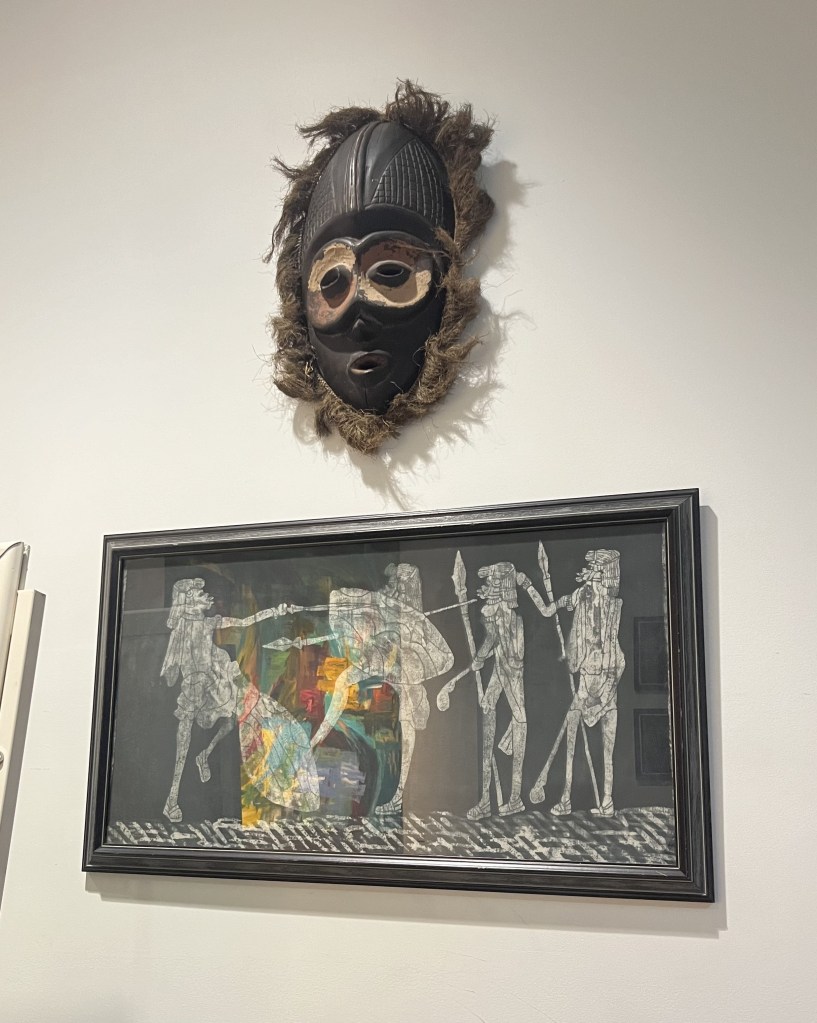
Traditional Congolese artifacts displayed inside Patience S CuisineA colorful, vibrant painting adorning the walls of Patience S Cuisine
While you can certainly order delivery or takeout, I highly recommend visiting the restaurant in person to meet Patience herself. Not only is she incredibly driven and hardworking—cooking, cleaning, marketing, and managing the restaurant on her own every Thursday through Saturday, while also working 16-hour med tech shifts the rest of the week, with Sunday as her only day off—but she also loves sharing Congolese culture and hospitality with the community.
Jolma, founder of Amza Superfoods, at the PSU Farmers Market in Portland, Oregon
Growing up, I always thought that flaxseed was something to be sprinkled on top of oatmeal or mixed into baked goods for an added boost of Omega-3 fatty acids. Thanks to Jolma, the creator of Amza Superfoods, I now know that with the addition of a few simple ingredients, flaxseed can be transformed into sweet and savory spreads that are delicious on their own or incorporated into other recipes.
One such recipe is barley bread swirled with ground flaxseed paste, something Jolma would eat on a daily basis in Redgong, a cultural hub in Tibet’s Amdo region, where she was born and raised. Another staple of Jolma’s childhood diet was Tsamba (AKA Tsampa), a nutrient-dense and culturally significant roasted barley flour that has sustained Tibetans for centuries (fun fact: the Dalai Lama has it every day for breakfast!).
Jolma learned to make Tsamba and other Tibetan foods from her late grandmother Sonam, whom she described as “indigenous, a nomad, a fabulous cook [who] couldn’t write.” Despite belonging to “a severely disadvantaged group,” Sonam understood the importance of education and inspired Jolma to embark on the journey that would lead her to become the first-ever girl from her village to earn a college degree: “I went to England to study English for a little bit, learning the ABCs at age 30, and then I came [to the United States] to continue my education. I needed to recharge myself. I originally had a degree in Tibetan literature and the Chinese language. I couldn’t do much here [with my degree], so I studied design, graphic design, web design.”
This career change eventually brought her to Portland, where she would become an entrepreneur after 17 years in the tech industry: “I came here for a job as a UX User Experience Design Consultant. I led a design team, and then that company decided to close its office in Portland, and then I got another job here. At the end of 2022, I decided to [launch Amza Superfoods], and then I quit [the] consulting job and I’ve been full-time for [Amza] since. We launched last year in April. It’s been a good journey, a tough one, but the one that I prefer.”
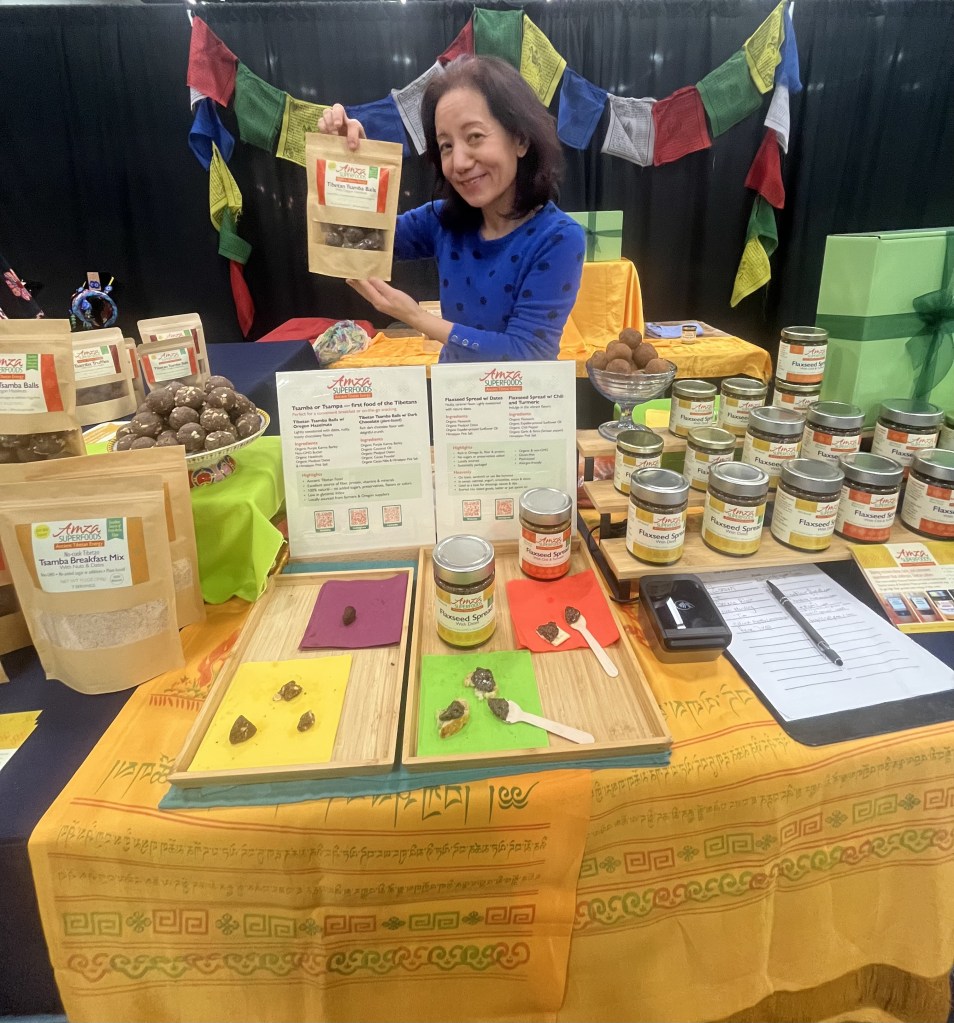
Amza Superfoods products showcased at the My Peoples’ Market in Portland, Oregon
One of the major impetuses for starting Amza (which is the phonetic spelling of “Amdo food”) was Sonam’s passing in 2012: “I went home to say goodbye to her a decade ago, and on the way back, in the air, [in] the sky in the plane, I promised I would write this cookbook that my grandmother couldn’t. So that took many years because I was working full-time and [had] my son, and then that grew into a seed: I just took a few recipes and made [them] into products.”
Handcrafted weekly in Portland in small batches, Amza’s versatile and health-conscious products feature brown flaxseed and heirloom wholegrain purple karma barley, ingredients Jolma’s family grew in Tibet and that she now sources locally. The purple barley she uses, for example, comes from Sun Gold Farm in Forest Grove, Oregon, and was brought to the U.S. from Tibet: “It’s a Tibetan barley. It originated in Tibet for sure. In 1924, an American traveled to Tibet and brought back some seeds; the seeds lasted in a USDA seed bank in Idaho for nearly a century, and then, in recent years, they were revived [by the Oregon State Barley Project] and they’re now grown here.”
More Amza products on display at the My Peoples’ Market
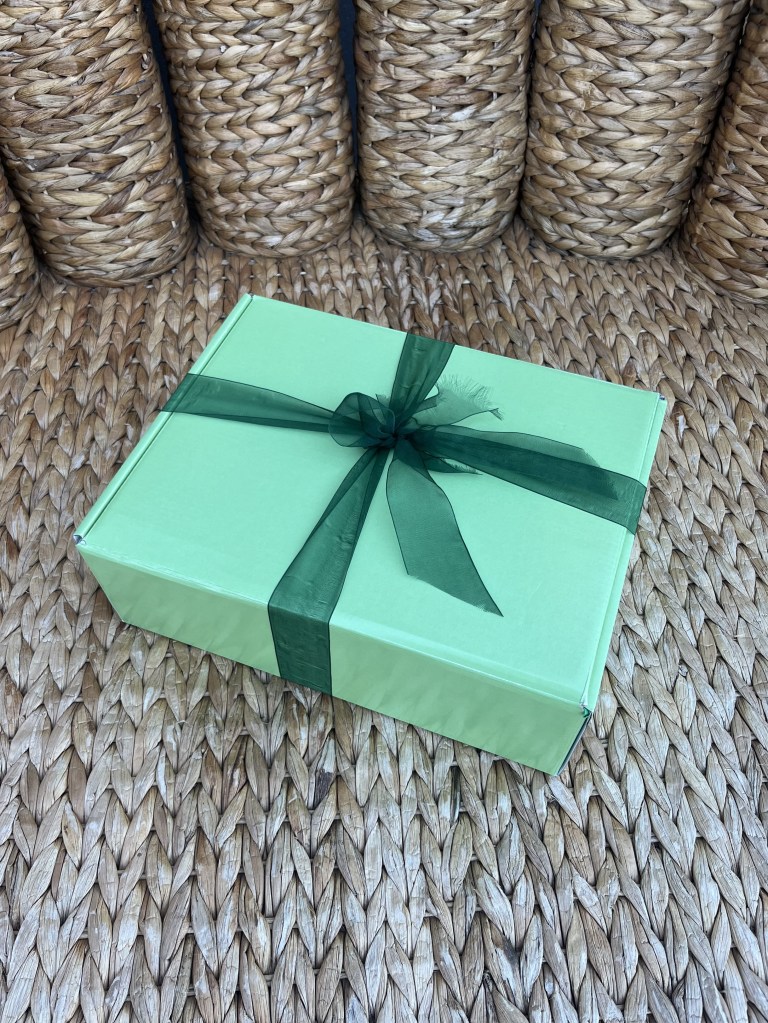
Drawing on her extensive knowledge and experience, Jolma decided to fill a significant gap in the American market by creating the first-ever U.S. exclusive collection of authentic Tibetan Breakfast Mixes, Tsamba snacks, and Flaxseed Spreads. While I have yet to try the No-Cook Tibetan Tsamba Breakfast Mix with Nuts & Dates, I can attest to the excellent quality and taste of all the other products, which I purchased as part of Amza’s beautifully wrapped Mid-Tier Marvel Gift Pack.
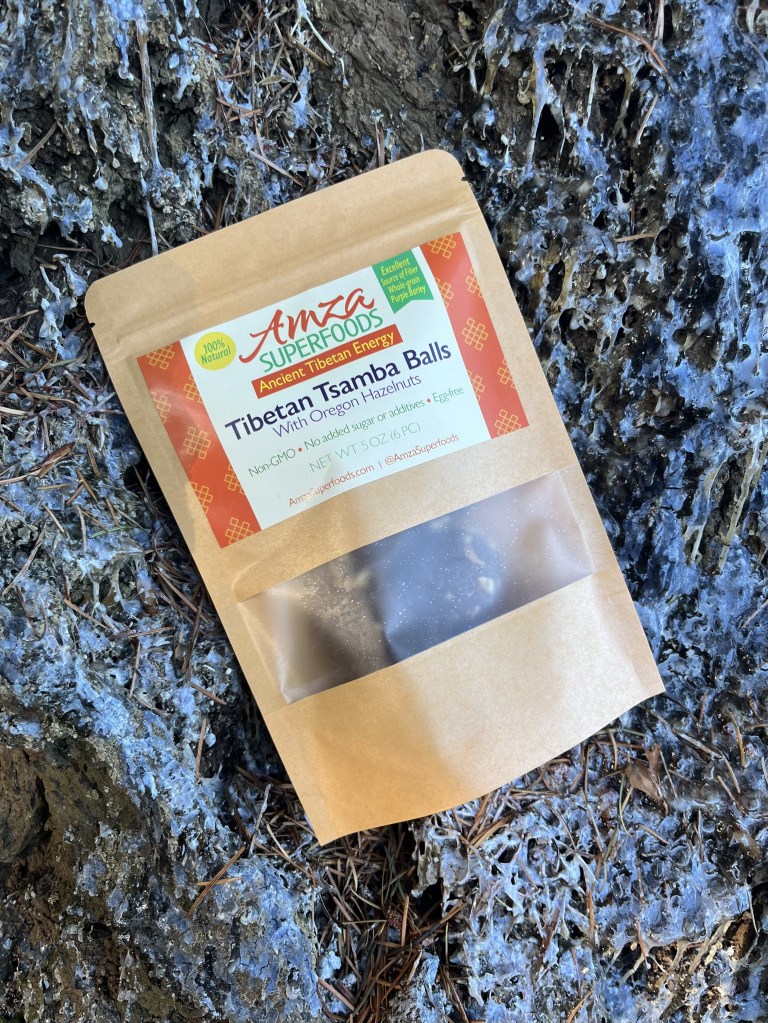
I loved how the Tsamba Balls embrace Jolma’s Tibetan heritage and her newfound Oregon home (case in point: the balls consist of an Oregon hazelnut enveloped in Tsamba!) and that they have the perfect level of sweetness, thanks to the dates she gets from a regenerative farm in California.
TSAMBA TRUFFLES WITH DARK CHOCOLATE
Tsamba Truffles with Dark Chocolate
The Tsamba Truffles, which Jolma describes as “modern Tsamba balls,” offer a divine, vegan-friendly alternative to a treat that is often high in calories, sugar, and fat. The addition of cacao nibs gives the truffles an extra satisfying crunch that perfectly complements the bittersweet taste.
FLAXSEED BUTTER WITH DATES
Flaxseed Butter with Dates
The Flaxseed Butter with Dates has a nutty, earthy flavor that pairs beautifully with yogurt, oatmeal, smoothies, and more. I even enjoyed eating the spread on its own straight from the jar!
FLAXSEED SPREAD WITH CHILI & TURMERIC
Flaxseed Spread with Chili & Turmeric
My personal favorite, the Flaxseed Spread with Chili & Turmeric, has a lovely kick, thanks to yerma, AKA Sichuan pepper. I used the spread in grain bowls and salad dressings, though the possibilities are truly endless!
Jolma at the My Peoples’ Market
As I nibbled on samples of the balls, truffles, and spreads at the My Peoples’ Market back in November, Jolma explained, “This food sadly comes from an underrepresented culture. I’m doing something authentic, something new, always healthy, always quality, always good for you and good for the environment.” Speaking of the glass jars used for the flaxseed spreads, she noted, “Even though these are expensive, [I use them] because they are more eco-friendly than plastic ones.” She also mentioned that “we are in the process of transitioning to more eco-friendly bags” for the Tsamba balls and truffles.
When I asked Jolma about her long-term dreams, she told me: “I’d like us to be known as a healthy, food-sharing business that does good for people and the environment. I’d like for us and Tibetan food to be known beyond the [local] community. And as [the] first-ever girl from my village to earn a college degree, I want to sponsor women and girls for education and help them start small businesses.”
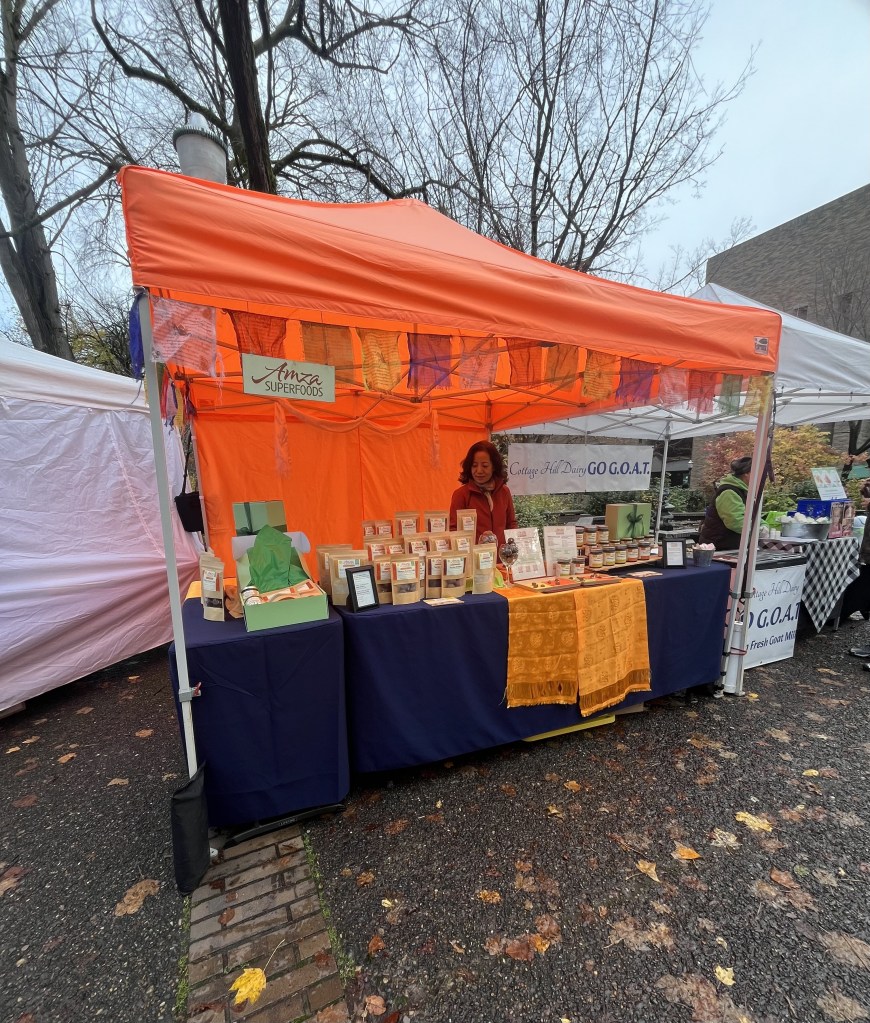
The vibrant orange Amza Superfoods tent at the PSU Farmers Market
Though she didn’t mention it in our conversation, I should add that Jolma’s commitment to sharing Tibetan culture and empowering underserved Tibetan women long predates her business ventures. Years before launching Amza, she wrote on Beyond Her Kitchen, a blog where she shared photos and stories about Tibet, “I hope sharing my stories will eventually help encourage a Tibetan mother to send her daughter to school, or inspire a girl to move beyond her own kitchen and become a global citizen.” The name is an ode to something her grandmother once told her: “To discover the world, one must move beyond her own kitchen.” While she now uses the blog on Amza’s website as her primary writing outlet, I highly recommend checking out Beyond Her Kitchen if you’re interested in learning more about Jolma and Tibet.
I’ll conclude this post with a piece of wisdom from Jolma that I found particularly touching: “If you support small businesses, if you support something, you stand for something, you will get support from them.”
Visit Jolma’s website and blog to learn more and be part of her inspiring journey.
As a Canadian citizen, I’m always a little ashamed to admit that I don’t like winter. In fact, one of the reasons I decided to work remotely and ultimately become a digital nomad was simply to avoid exposing myself to the cold and snow!
Lately, though, I’ve been trying to reframe my relationship with the season and combat my long-ingrained belief that the final weeks of fall represent the most depressing time of year. I have a long way to go before fully embracing winter and peacefully accepting the end of autumn, but I’m happy to report that I’ve found something to keep me going as the days grow darker and colder: holiday markets!
One of the loveliest markets I attended in recent weeks was My Peoples’ Market, Portland’s largest BIPOC maker’s market. Held at the Oregon Convention Center from November 23-24, the event introduced me to many talented creators, including Robert Batulayan and Kristy Mollena-Batulayan, the founders of Koa Roots, as well as Robert’s sister Vanessa.
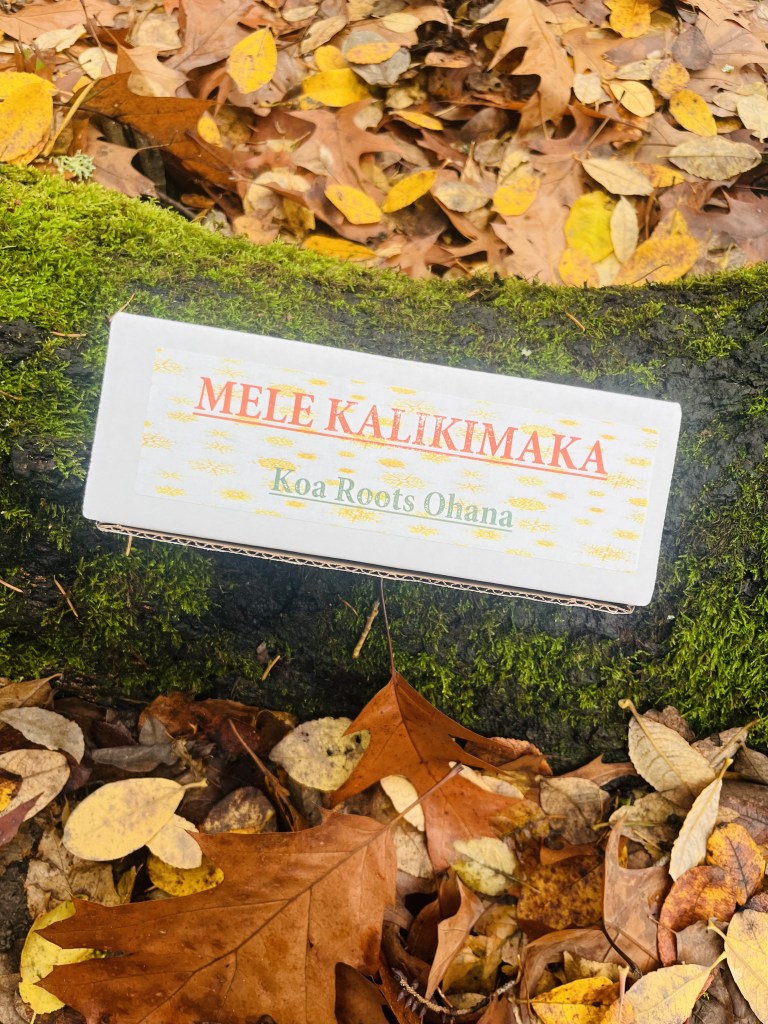
The outside of a gift box from Koa Roots, reading “Mele Kalikimaka,” the Hawaiian transliteration of “Merry Christmas”
Robert and Kristy hail from different islands in Hawaii and met while studying in Corvallis, a city in central Western Oregon. In college, the couple used to do a lot of seafood bars, and it was during a night of hosting that a happy accident occurred. As Robert recalled in a segment on KOIN 6, “We had a friend that had brought over some smoked Hawaiian sea salt and then we burned the drawn butter that we were supposed to make for the Dungeness crab that night.” Rather than discarding it, they combined the butter and salt, creating a prototype of their OG product: Smoked Brown Butter.
Made with fragrant applewood smoked spices infused in local butter, the couple’s cooking butters come in various flavors, including Garlic & Onion, Chili, and Sage & Thyme. Their latest variation, Oregon Truffle & Hawaiian Sea Salt Smoked Butter, exemplifies the cultural and culinary fusion at the heart of their business. Robert summed it up best, saying, “A lot of our flavors incorporate Oregon and Hawaii.”
Although the butters make a fantastic addition to savory dishes and sweet treats alike (check out the awesome recipes on Koa Root’s blog for more information!), the couple knew they also “wanted to do something sweet” to honor their roots and their newfound Pacific Northwest home. Eager to offer a product that everyone could enjoy, regardless of dietary restrictions, they decided to put a plant-based spin on the fruit butters they grew up eating back in Hawaii. Reflecting on this decision, Robert shared, “Being here in Oregon, we’ve met a lot of people that were either lactose intolerant or allergic to eggs, so we went to go and try to figure out a way to make something that we normally would put eggs and butter in and then settled with oat cream that we make in house.”
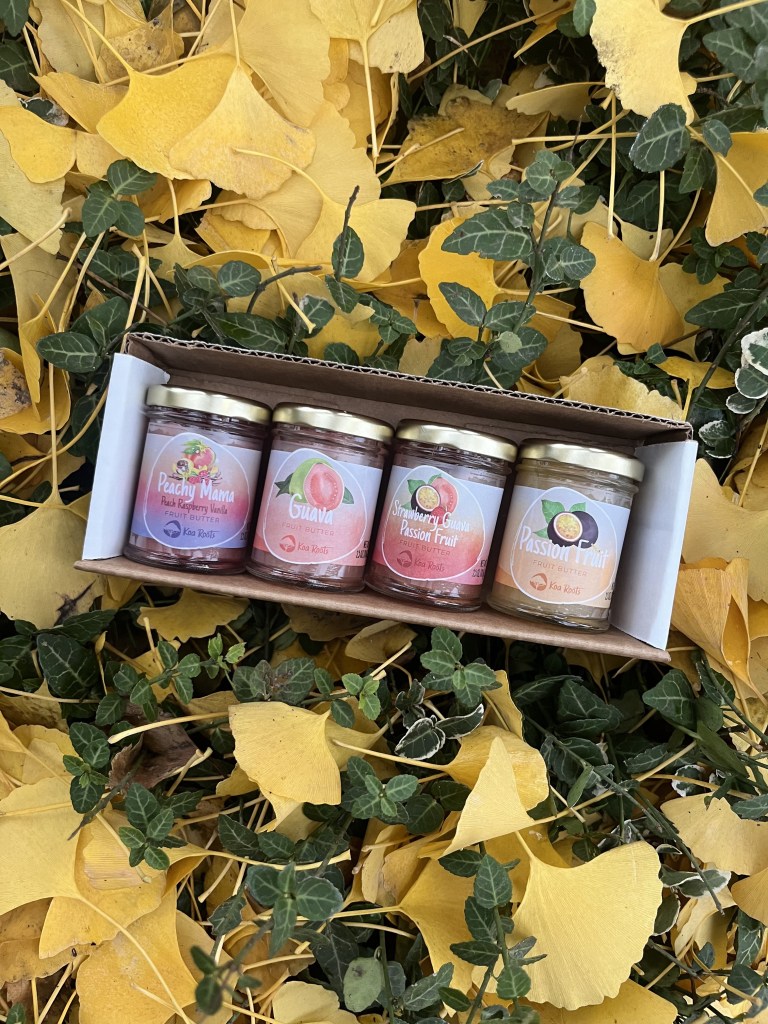
Fruit Butter Gift Pack with four flavors: Peachy Mama, Guava, Strawberry Guava Passion Fruit, and Passion Fruit.
The fruit butter gift pack I picked up from the market featured four flavors: Guava, Passion Fruit, Peachy Mama, and Strawberry Guava Passion Fruit. The latter, Kristi revealed, was “made for our wedding. We actually did that as a launch because he loves guava, I love passionfruit, and we wanted to incorporate Oregon into it, so we decided on Oregon strawberries.” As for the Peachy Mama, she explained, “The two farms that we get the peaches from, [Peachwood Orchard in Hood River, Oregon and Pheasant’s Eye Farm in Parkdale, Oregon] are BIPOC, family-owned farms.” The butter also contains raspberries from the Willamette Valley (Oregon’s wine country) and vanilla pods from the Laie Vanilla Company on Oahu, Hawaii, which the couple uses to make their own vanilla sugar. Kristi noted that the Peachy Mama “takes about a year for us to make, which is why we only bring it for the holidays.”
Robert elaborated on the process, saying, “We don’t use any chemical emulsifiers in the fruit butters, so they will naturally split like a natural peanut butter, so give them a shake and stir, and then because we don’t use enough sugar in them, they’re not shelf stable after you open them, so you do need to put them in the refrigerator. We really believe in natural. The first ingredient is always going to be fruit, and then the sugar we use is all cane sugar. We don’t use a lot of sugar beets, [since] it gives it a weird flavor. We’ve always spent a little more and done the cane sugar.”
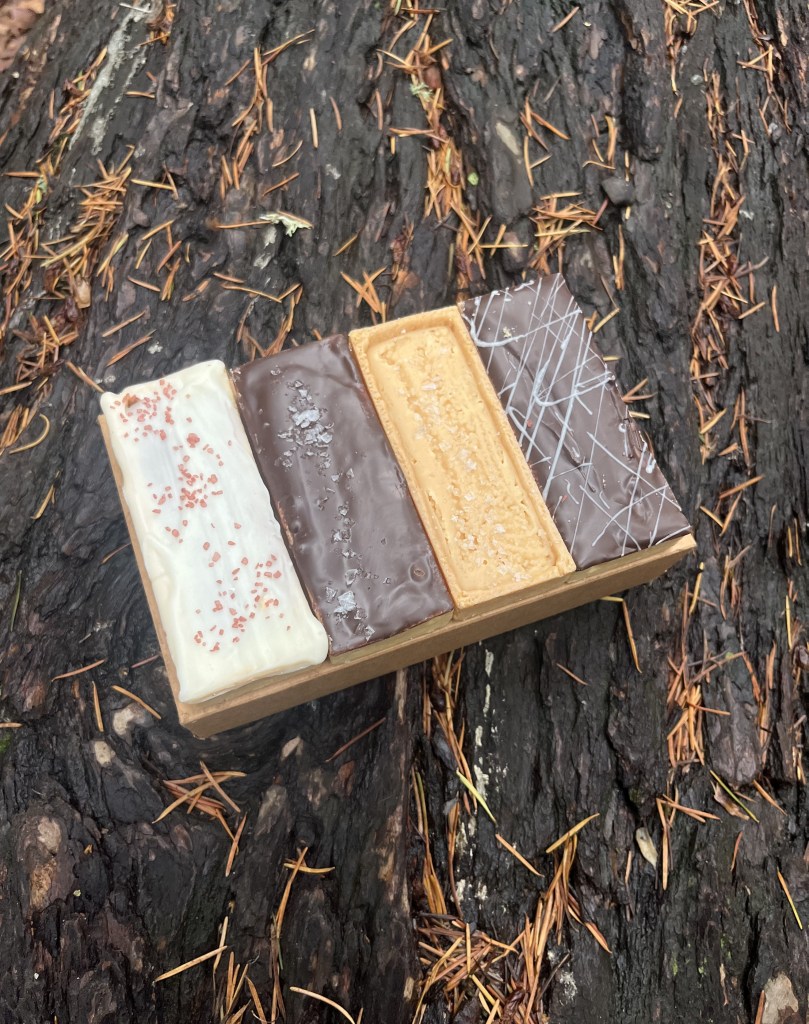
As I admired the rest of their beautiful display (which I sadly forgot to take pictures of), Robert explained how their snacks grew out of a desire to minimize waste: “We started making value-added products with a lot of the byproducts that we had [from] making our fruit butters and brown butters, so we don’t waste [anything]. We put a lot of things that we strain out into our snack mix.” The flavors rotate but have previously included Irish Cream, Ube & Pandan, and Nacho Cheese. Kristi pointed out that “the extra fruit butters we have we incorporate into other products,” like the delicious set of caramel shortbread bars pictured below.
Caramel Shortbread Bars in four flavors: Original, Cashew Crunch, Lilikoi (Passionfruit), and Marionberry
When I asked the couple about their long-term goals, they spoke about their focus on giving back: “We love to share our story. We do a lot of advocacy, a lot of business training, a lot of education, helping small businesses start up. We incorporate Koa Roots in it. We’ve done a few case studies to help raise funds for everybody. We want to have it evolve that way, [with] a lot of advocacy, community, and philanthropy.” Kristi added, “But the thing is, we always remember our mission and why we started this. That’s why we always come back to our roots of being humble.”
Speaking of roots, Robert explained that “The name [Koa Roots] is a play on words. Koa is the largest, hardest tree that grows indigenously in Hawaii, but it also means perseverance, strength, bravery, taking on new challenges, so we use koa as a play on words rather than technically koa.” Kristi added that the idea of roots is important “so that we never forget where we came from.”
If you’re looking for a way to bring a taste of Hawaii into your home while supporting a small business committed to sustainable practices and community engagement, be sure to check out Koa Roots! Their products are versatile, delicious, and made with so much love and care for the environment and customers.
Back when I was in Vancouver, BC, I met a wonderful Barbadian-Canadian chef named Robert Linton, who had recently started a business selling Barbados pepper sauce. As we chatted about his story, Robert mentioned that he uses Demerara sugar from Guyana as part of his commitment to honoring his family’s roots (his wife is Guyanese).
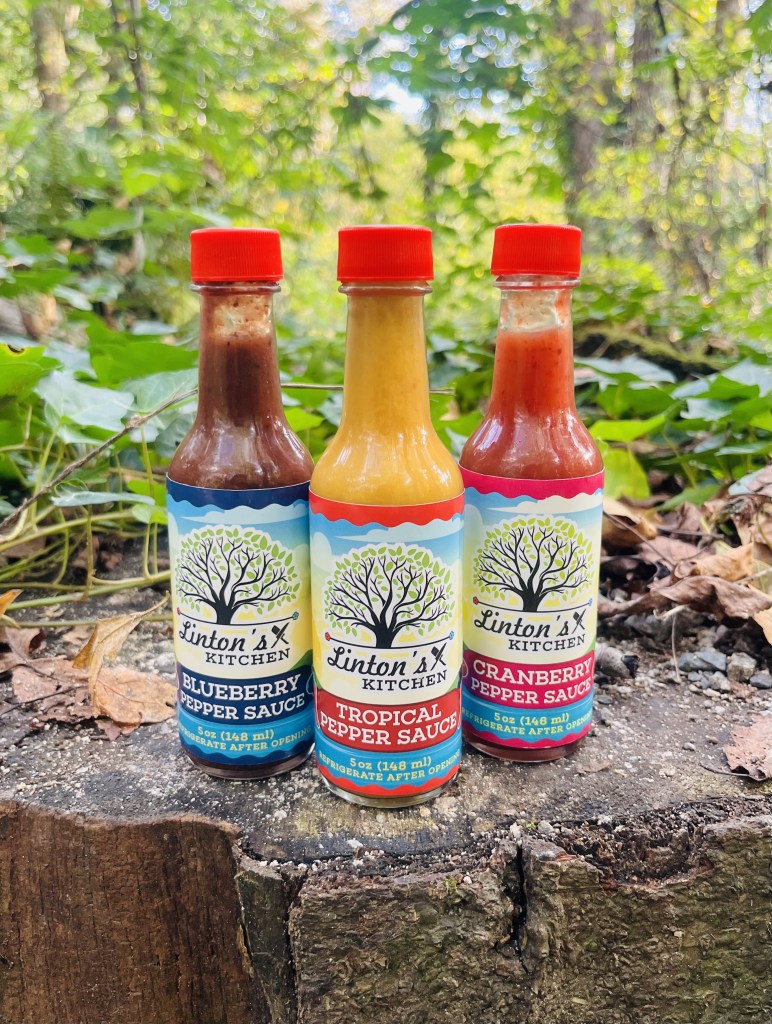
Blueberry, Tropical, and Cranberry Pepper Sauce from Linton’s Kitchen
Our conversation made me realize that I knew next to nothing about Guyana, so I did what I always do when I’m interested in learning about another culture: research restaurants where I can try the cuisine! To my pleasant surprise, the first spot that popped up was a food cart in Portland, Oregon, which happened to be my next destination.
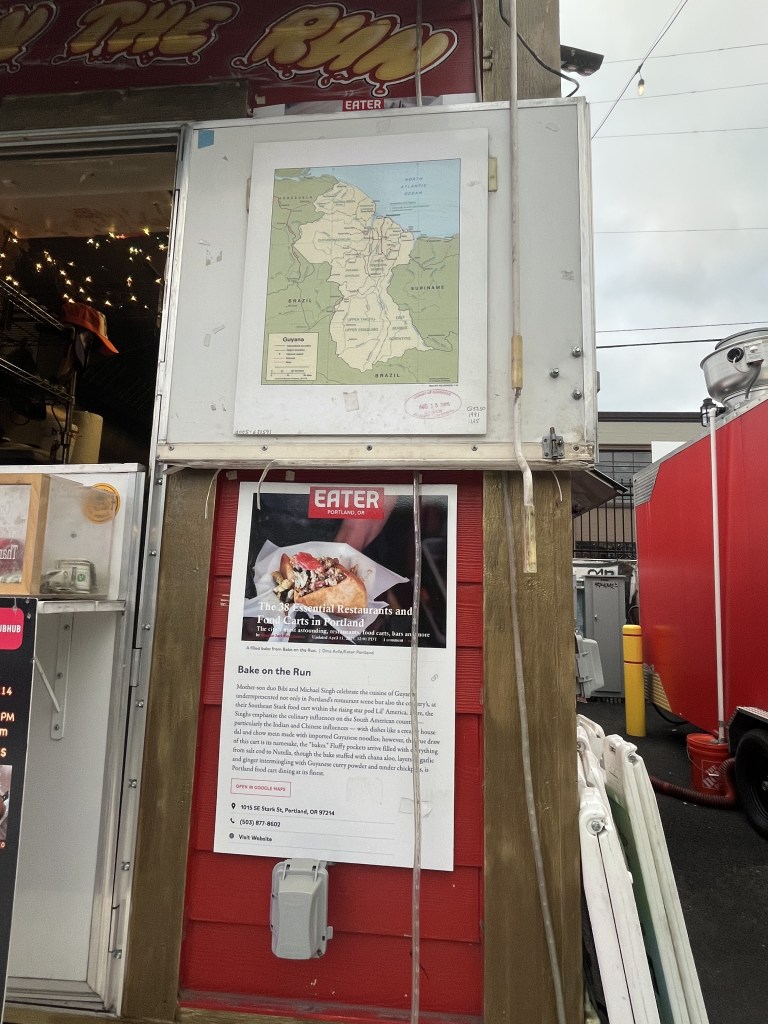
A map on the front of the food cart highlights Guyana’s position in South America, neighbored by Venezuela, Brazil, and Suriname
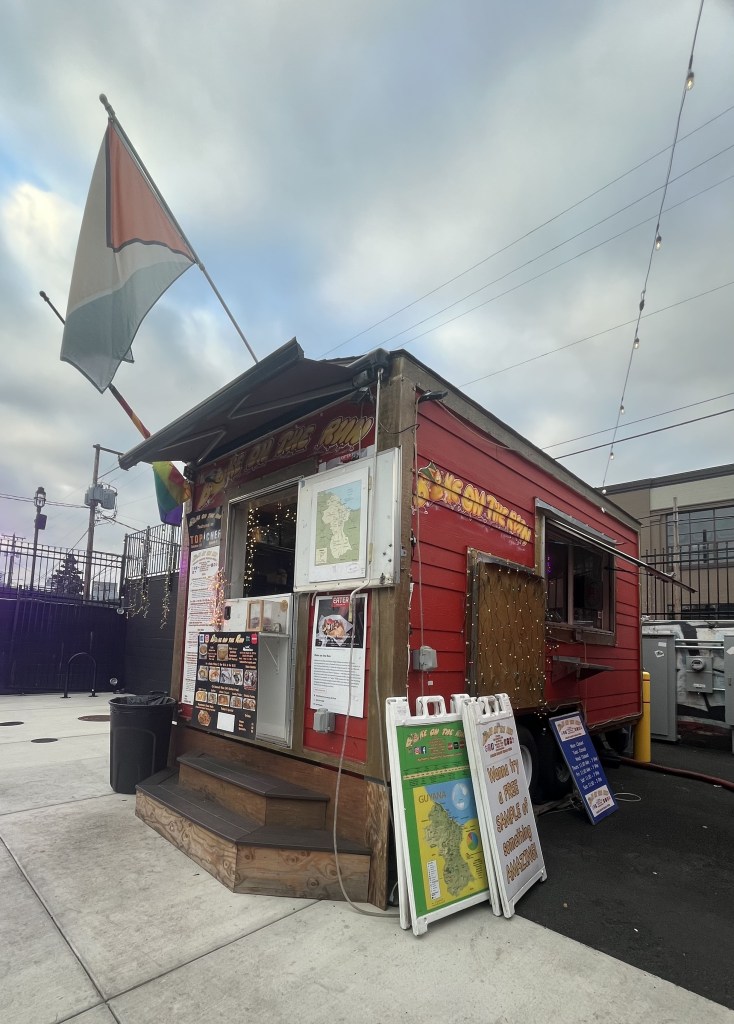
Founded by mother-and-son duo Bibi and Michael Singh, Bake on the Run is the West Coast’s first and only Guyanese food joint. The business opened in September 2018 and is part of the WonderLove Food Cart Pod, a vibrant entertainment hub in Portland’s Central Eastside.
The front of the bright red food cart
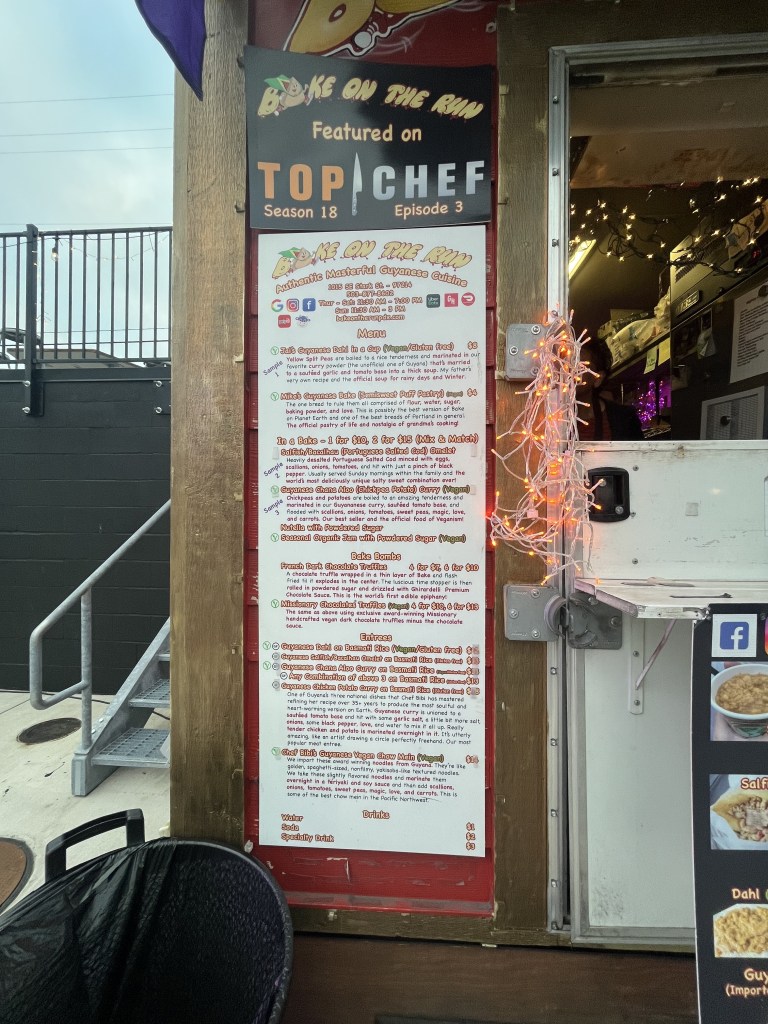
I visited Bake on the Run on a frigid Friday afternoon and was greeted by the friendly and talented Chef Bibi, who offered me two samples: a tiny paper cup of Jai’s Guyanese Dahl (Yellow-Split Pea Curried Soup) and a mini serving of Guyanese Chana Aloo (Chickpea Potato Curry) in a Bake—the semisweet Guyanese puff bread of the business’ name. Both were incredibly nourishing and delicious, and, as usual, I had a hard time deciding what to order.
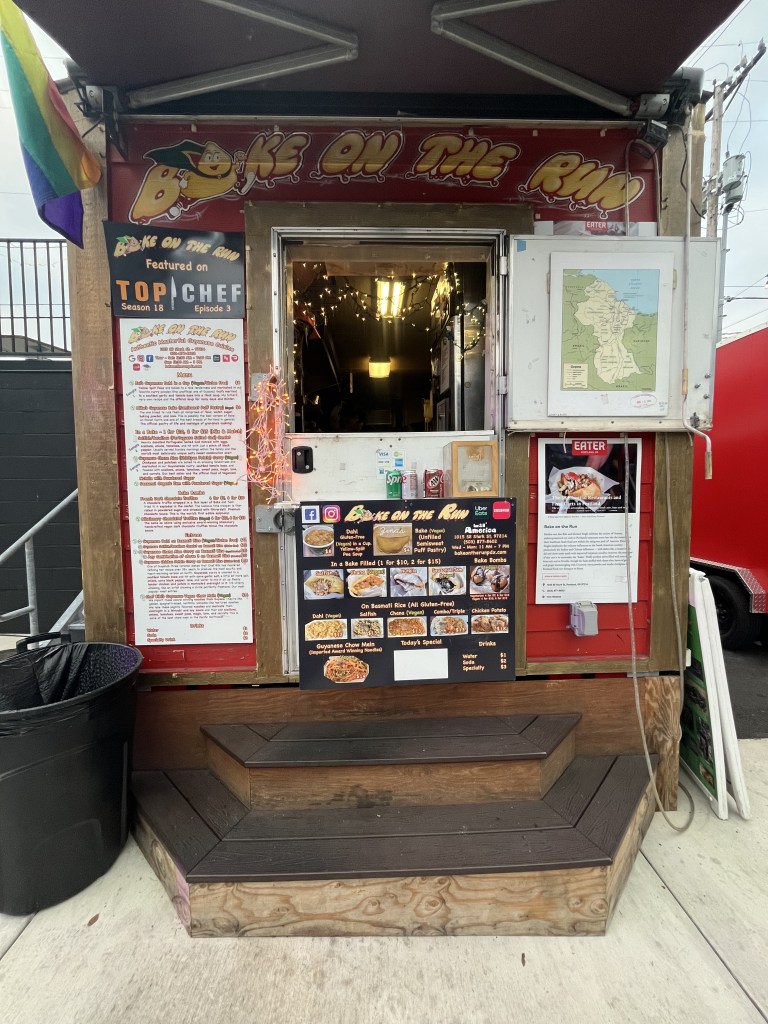
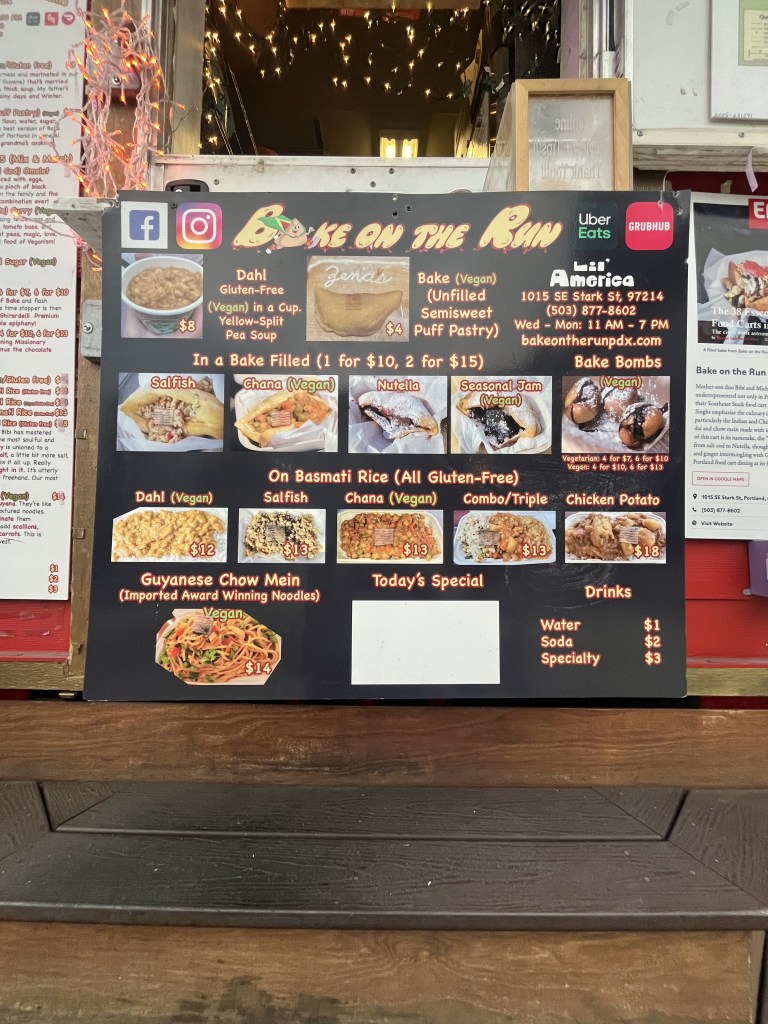
A close-up of the food cart’s in-depth written menuAnother close-up of the food cart’s visual menu
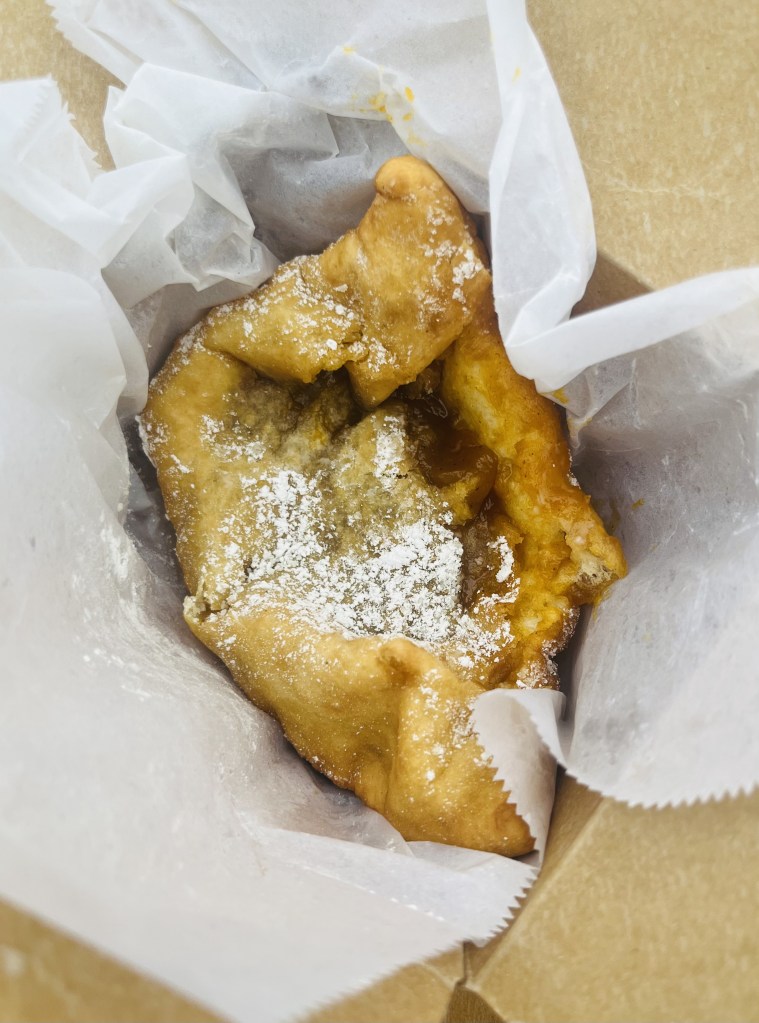
After reading the detailed menu descriptions and catching glimpses and whiffs of the dishes other customers were picking up, I eventually settled on the full-size Guyanese Chana Aloo in a Bake and Chef Bibi’s Guyanese Vegan Chow Mein, made with award-winning noodles imported from Guyana. Since I’d skipped lunch and noticed there was a $5 discount for buying two, I decided to get a second bake with seasonal organic jam and powdered sugar. Eager to cling to the remaining days of fall, I opted for pumpkin butter.
Guyanese Chana Aloo in a BakeChef Bibi’s Guyanese Vegan Chow MeinBake with Pumpkin Butter
From the perfectly chewy noodles of the chow mein and the soft, steaming dough of the bakes to the kick of Chef Bibi’s famous pepper sauce (complimentary with all savory dishes) and the heartiness of the Chana Aloo, I couldn’t have asked for a better meal to keep me warm and satiated all weekend long (the portions were incredibly generous, so I ended up with several meals!). The fact that all three dishes are vegan was the cherry on top.
Before heading home to put my leftovers in the fridge, I got to chat a little with Chef Bibi, who explained that her son Michael, the founder of Bake on the Run, quit his job in the business world to do something fun. A lifelong foodie, Michael came to Portland with his girlfriend and proposed the idea of opening a food cart where Bibi could share her home cooking with a wider audience. The chef had originally planned to stay in town for only a few months. Now, it’s been six years since the business started, and things are still going strong.
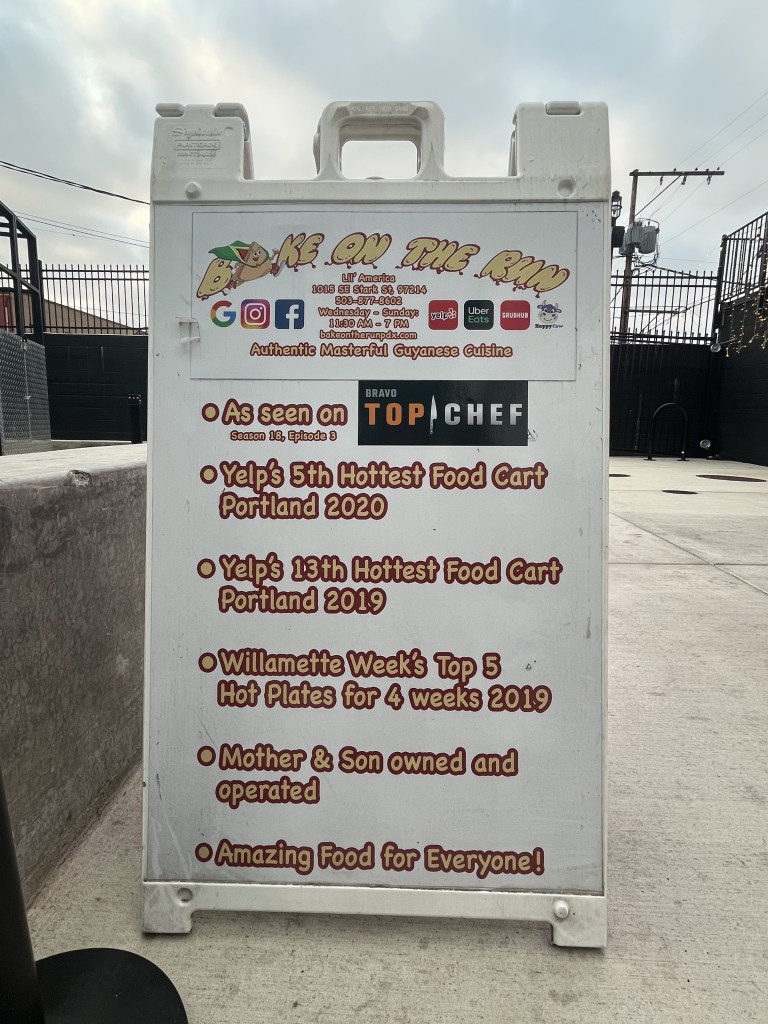
A sandwich board near the food cart highlights the business’ accolades
Though it can sometimes be challenging to tell where we’ll end up and for how long, know that if you’re spending any amount of time in Portland, one thing is certain: you’ve got to check out Bake on the Run!
Visit Bake on the Run:
Address: WonderLove Food Cart Pod, 262 SE Main St Portland, OR 97214
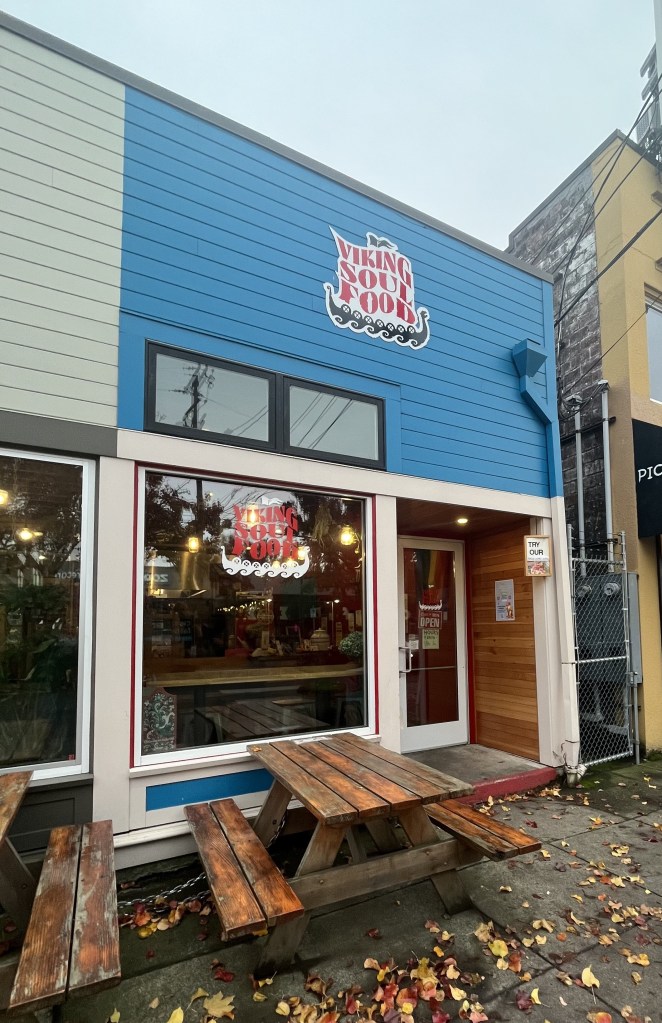
If you had asked me to name a single Norwegian dish before last week, I sadly wouldn’t have been able to give you an answer. Now, thanks to Viking Soul Food—a cozy Norwegian spot in Portland’s Woodstock neighborhood—I’ve not only learned about lefse (pronounced lef-sa) but also discovered how beautifully Nordic traditions can meld with Pacific Northwest flavors.
Viking Soul Food is the brainchild of Megan Walhood and Jeremy Daniels, a talented duo who met while working as chefs at Nostrana, a celebrated Italian restaurant in southeast Portland. During their time there, they started a supper club, which eventually inspired them to strike out on their own. And because we’re talking about Portland—a food truck paradise—what better way to break into the culinary scene than with a food cart? As Megan explained, “At the time, food carts had gotten really huge in Portland. It was the cheapest way to get your food out there.”
The concept for Viking Soul Food took shape when Megan, the daughter of a Swedish mother and a Norwegian father, introduced Jeremy to her family’s tradition of eating lefse—a Norwegian flatbread made with potatoes—during Christmas. While lefse is usually enjoyed with just butter, Megan knew they were onto something when Jeremy, who moved to Portland from Hawaii in 1994, suggested adding fillings. They ran with the idea, drawing inspiration from the foods Megan grew up eating to create a menu they describe as “Pacific Northwest-meets-Nordic cuisine with our own spin on it.”
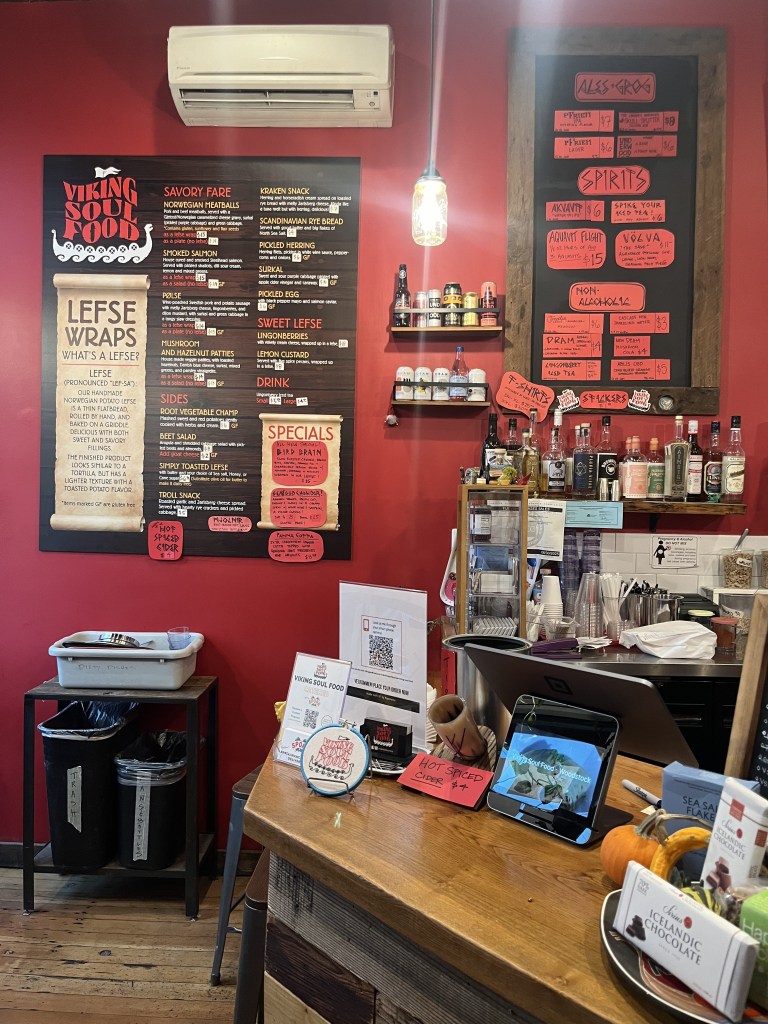
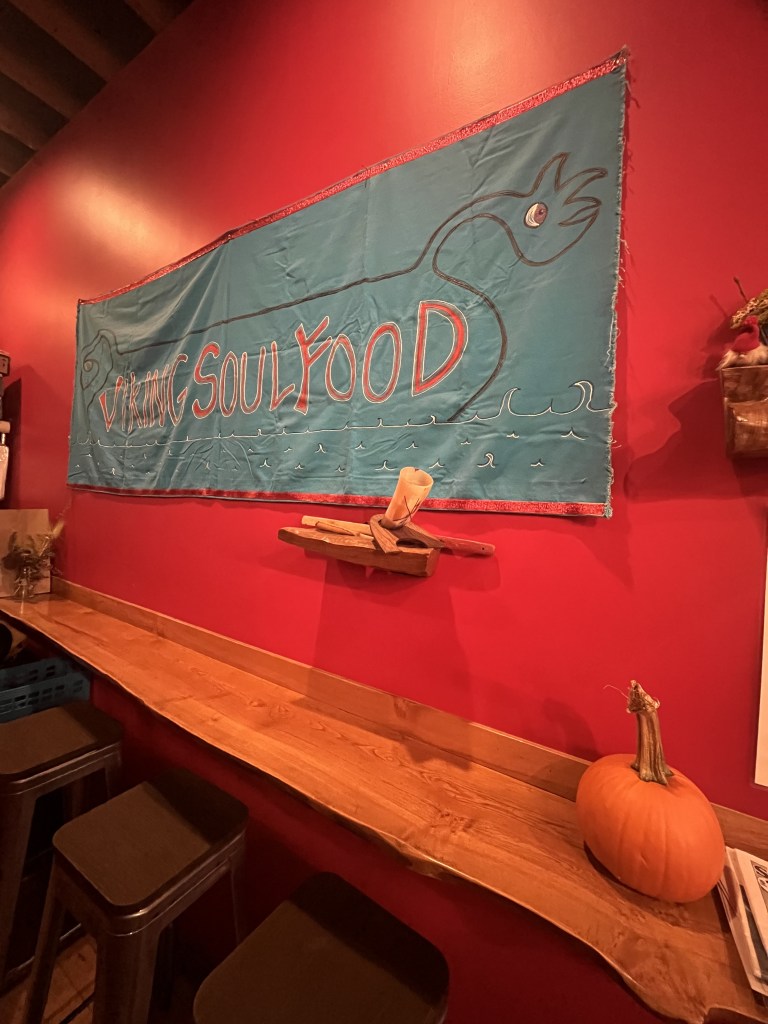
A look inside the restaurant
When the couple first opened their food cart in 2010, many of their initial customers were older Scandinavian people who were craving lefse but didn’t want to go through the trouble of making it themselves. Over time, they also attracted a loyal following in Portland’s small but mighty younger Scandinavian community. Another key to their ongoing success since transitioning from food cart to brick-and-mortar in 2022 has been Portland’s adventurous food scene. As Megan put it, “People doing unusual things is well received here, which is why we’ve done well.”
Another glimpse of the restaurant’s bold red and blue interior
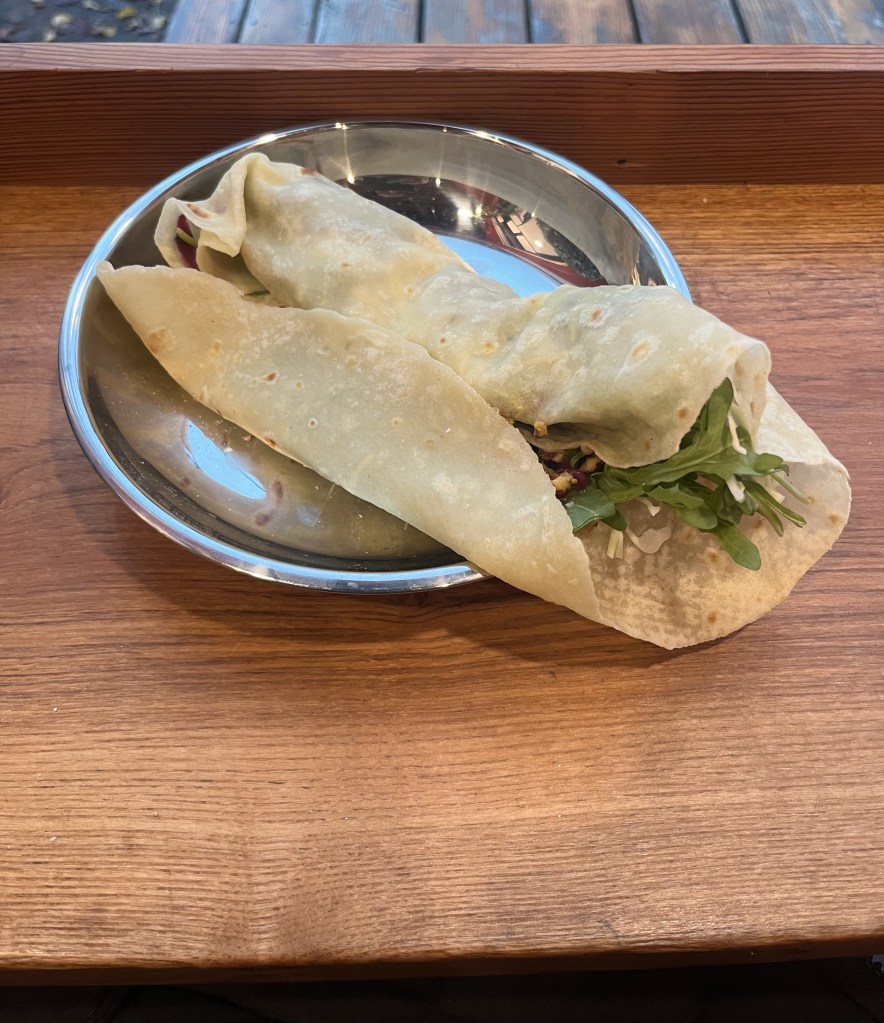
While you can certainly come to the petite but welcoming restaurant to enjoy lefse (rolled by hand and baked on a griddle every day) the traditional way—with just butter—I’d highly recommend trying one of their wraps. The fillings include Norwegian meatballs, smoked salmon, pølse (wine-poached Swedish pork and potato sausage), and mushroom and hazelnut patties. Being vegetarian, I opted for the latter, which comes with homemade mushroom and hazelnut patties, toasted hazelnuts, Danish blue cheese, mild greens, parsley vinaigrette, and surkal—sweet and sour purple cabbage pickled with apple cider vinegar and caraway. Knowing that Oregon is the nation’s primary producer of hazelnuts, I appreciated how the wrap seamlessly combines PNW and Norwegian influences into one filling, flavorful, and unique meal.
Lefse wrap with mushroom and hazelnut patties
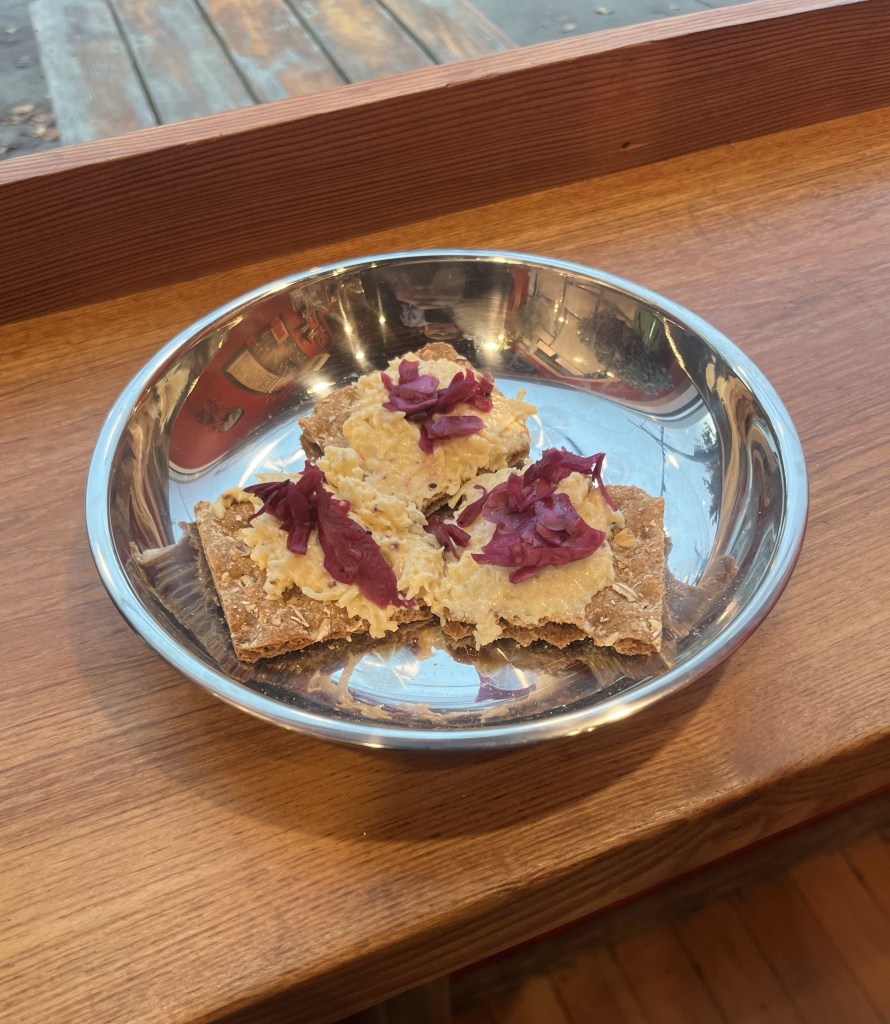
Other great examples of Megan and Jeremy’s fusion creations are the Kraken Snack and Troll Snack. The former, which they describe as “a Norwegian tuna melt,” features herring and horseradish cream spread on toasted rye bread with Jarlsberg cheese—a mild Norwegian cow’s milk cheese often compared to Emmental. The latter, pictured below, consists of roasted garlic and Jarlsberg cheese spread smeared on rye crackers and garnished with surkal. I loved how the salty, creamy Jarlsberg spread complemented the briny surkal and would definitely consider adding the side to my regular snack roster if I had all the ingredients on hand!
Troll Snack
When I asked the couple how they’d describe Portland’s food scene to someone who’s never visited, Megan didn’t hesitate. “Diverse,” she said. “Standards overall here are very high in terms of quality of food execution [and] quality of ingredients being used. This is a great city to live in if you want to learn how to be a really good cook and have access to great food and great ingredients. It’s kind of a mecca for cooks, as well, so it kind of perpetuates itself that way.”
And for those of us who (sometimes, often, or always—no judgements here!) prefer eating to cooking, I should add that Portland is also a fantastic place to visit if you want to expand your culinary horizons and try innovative dishes by talented chefs like Megan and Jeremy!
Visit Viking Soul Food:
Address: 4422 SE Woodstock Blvd Portland, OR 97206





 Market Hauls and Local Noms